By Eric Léopold, Founder, Threedot
In 2011 I wrote a business case for a new project called New Distribution Capability (NDC). Around the same time, as distribution and payment are closely related, I was working on another one for a New Payment Capability (NPC). The approach was similar: improve the customer experience by leveraging modern technology. However, other dimensions of these initiatives, from the roles of incumbents to their business models, varied a lot between the two domains. IATA ended up launching multiple payment projects, such as IATA EasyPay. What would an airline’s New Payment Capability look like today?
Customer experience
One of the most customer-friendly payment experiences today is probably Alipay, at least from my recent experience in China. It works online (mobile) and offline (QR). The service apps (mobility, etc.) are integrated in the Alipay app. It includes peer-to-peer payment, i.e. the app can receive payments (unlike a credit card). The integration with apps is native, there is no add-on security feature that disturb conversion, like “3DSecure” for credit cards, unless a foreigner feeds the app with a credit card.
While modern payment methods provide instant money transfer, bank transfers may still take days. The parallel with paper mail vs e-mail makes one wonder how long multi-days bank transfers will resist to instant transfers.
In summary, customers get the instantaneous (1-click) experience without compromising security.
Payment methods
Different regions have embraced specific mainstream payment methods. In Europe and North America credit and debit cards are dominant, but not in China where QR codes are widely used. In India UPI is a standard for bank-to-bank transfer, whereas mobile payment is most popular in Kenya. In parallel to all forms of digital payment, traditional cash is still used and it’s fascinating to witness how some taxi drivers still prefer cash for “financial” reasons.
Global travelers need a payment capability that is accepted globally based on local preferences.
Currencies
An ideal payment solution, or capability, should facilitate the usage of a range of fiat currencies (USD, EUR, GBP, CHF…) as well as points from loyalty programs and crypto currencies, depending on the needs and preferences of customers. At the same time, prices need to be displayed in each currency or type of currency.
Installments and credit
The popularity of Buy-Now-Pay-Later (BNPL) solutions enabling payment by installments has grown in the airline market as flights represent a relatively high expense.
While instant payment provides speed, slower bank methods can provide credit facility. BNPL solutions show how credit scoring can be automated and seamlessly integrated into payment processes.
Security, fraud and chargeback
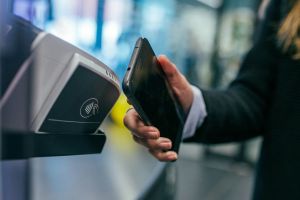
Mobile wallets enhance payment convenience by adding a storage layer where customers can manage multiple payment methods and handle security through biometric checks and tokenization.
At the same time credit card transactions may generate issues. The cost of card fraud to airlines may exceed $1Bn per year. In 2019 in IATA settlement systems, agent debit memos for card chargebacks represented 20% in value. In the chargeback scenario, the customer disputes a card transaction, either incorrect or unauthorized or the service was not delivered.
The ideal payment capability would necessarily reduce fraud and related payment issues.
Business model
Payment methods that offer rewards, often funded indirectly by merchants, may face limited acceptance by merchants due to their higher transaction fee, or be accepted with a merchant surcharge where regulation allows it.
Payment is regulated in some markets, e.g. Europe has voted the Payment Service Directive, which may limit the amount of transaction fees or the ability to add surcharges.
Regardless of the business models and hidden costs, customers expect transparency in payments.
Conclusion
Travel services represent a large share (maybe 20-30%) of the global E-commerce sales and digital payments.
There is potential to significantly improve the payment experience in the travel industry by leveraging modern technology. The NPC would define how customers can safely store payment methods in digital wallets and connect them seamlessly to travel merchants, so that every payment transaction is safe and frictionless.
For more from Eric Léopold also see:
- The dual mode of airline innovation in technology
- 26 challenges and opportunities on aviation’s road to 2050
- Five opportunities to improve travelers’ experience post-COVID