by Elsie Clark | Dec 17, 2025 | Airlines, Airports, Digital Transformation, News, Payments, Retailing, Travel Tech
The aviation industry in Asia is moving faster than ever, driven by cutting-edge technology, bold collaborations, and a deep commitment to sustainable growth. The Aviation Festival Asia Awards 2026 are here to celebrate the organisations and initiatives that are redefining what’s possible in the region.
We invite you to recognise the organisations that have truly excelled this year across operations, customer experience, and digital transformation.
Award Categories
- Sustainability Achievement Award: Recognizing outstanding commitment to environmental responsibility and sustainable practices in aviation.
- Best Use of AI: Honouring exceptional application of artificial intelligence to improve operations, efficiency, or passenger experience.
- Collaboration of the Year (Airline/airport/ground handlers only): Celebrating a successful partnership between airlines or between an airline and an airport that delivered measurable innovation or impact.
- Industry Game-Changer: Awarded to an airline that has redefined norms, challenged conventions, and driven transformative change within the industry.
- Smart Airport Journey Award: Recognizing an airport that has significantly enhanced the passenger journey through innovative technology solutions.
- Digital Innovator of the Year: Awarded to a company, team, or initiative that demonstrated visionary use of digital tools or platforms to reshape airline or airport operations, customer experience, or service delivery.
Submit your nominations here!
Key Submission Details
Submissions are based on individual organisations and their groundbreaking achievements. While the award is for the company/organisation, we encourage you to mention individual people or teams in your submission if it helps illustrate the achievement; this will help us in reaching out to potential finalists.
The deadline for all submissions is Monday, Jan 19th.
Please note: To officially accept and receive an award at the ceremony during Aviation Festival Asia (March 25 – 26, 2026, Singapore), a representative from the winning organisation must be registered to attend the event
Submit your nominations here!
We can’t wait to recognise the achievements of the industry in Singapore!
Our Battle of the Airline Apps Asia competition is also open for submissions. This separate award honours the best in airline technology, customer service, and operational excellence. Be sure to vote for your favourite today!
by Elsie Clark | Dec 16, 2025 | Airports, Digital Transformation, News
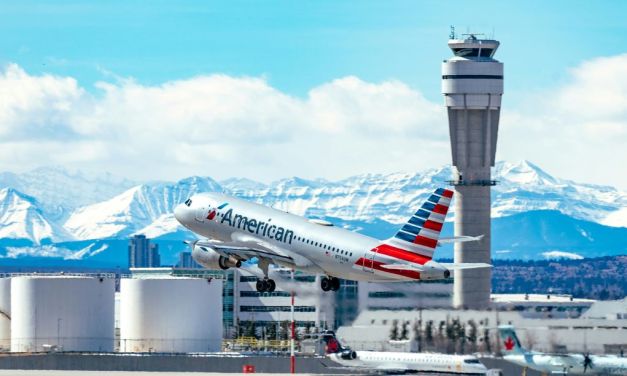
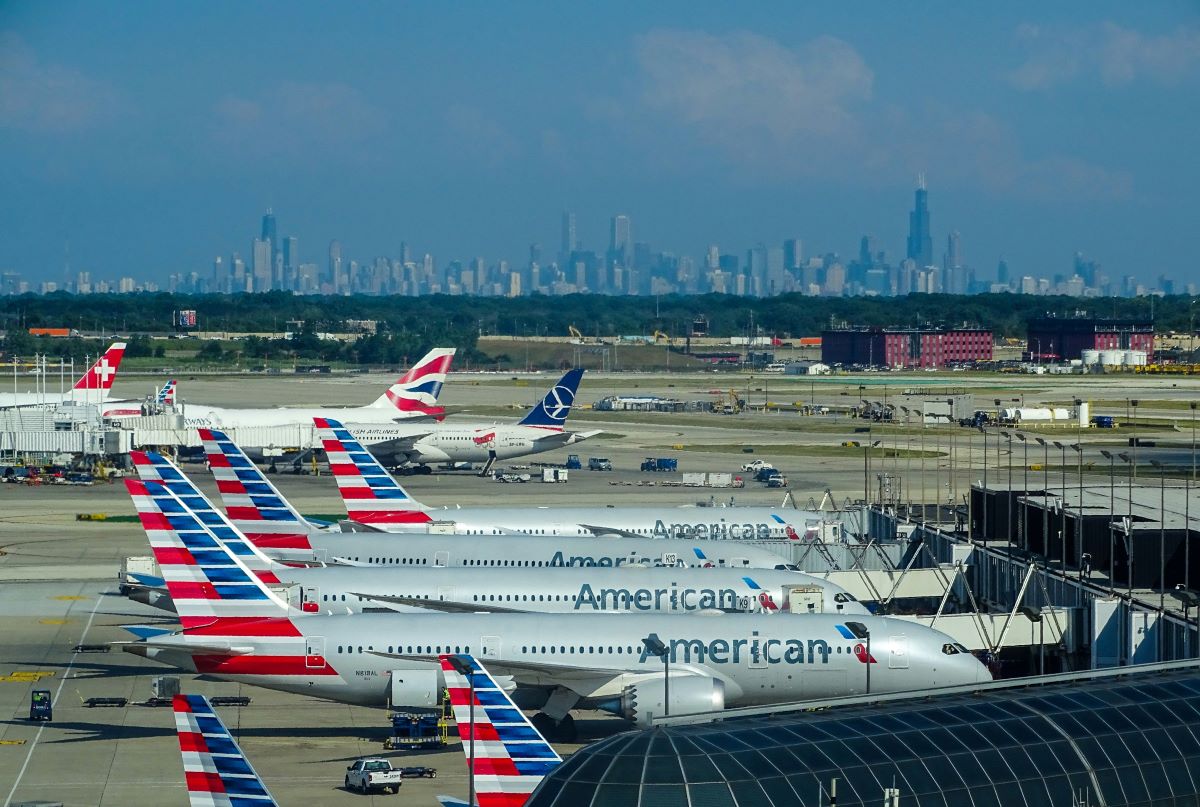
Elon Musk and Space X’s VP for Starlink Engineering have disparaged American Airlines on X as the airline entered talks for a potential inflight connectivity deal with rivals Amazon Leo.
Bloomberg first reported that American were discussing a partnership with Amazon last week. Formerly known as Project Kuiper, Amazon Leo has launched 150 low-earth orbit (LEO) satellites, putting it directly in competition with the Starlink project.
Seemingly taking a swipe at the potential Amazon/American partnership, SpaceX VP for Starlink Engineering Michael Nicolls posted on X:
Only fly on airlines with good connectivity… and only one source of good connectivity at the moment…
Elon Musk, SpaceX founder and CEO, added fuel to the flames, replying to Nicholls’ post:
American Airlines will lose a lot of customers if their connectivity solution fails
Starlink’s LEO coverage far surpasses that of its competitors. With a constellation of 9,000 satellites, the company already provides internet access to more than 8 million users worldwide. So far, JetBlue are the only airline to have signed a deal with Amazon LEO for inflight WiFi, while Starlink boasts an impressive roster of aviation partners, including IAG, Qatar Airways, and United.
American Airlines currently partners with Viasat to offer inflight WiFi to passengers. Internet access comes at a fee of US$10 or more, but subscription plans are available for frequent flyers. Airlines such as Emirates, which have gained a reputation for industry-leading customer service, say Starlink WiFi will be available for free to all passengers once installation is complete. As American doubles down on its premiumisation strategy, improving inflight connectivity could be a key market differentiator.
Join us at Aviation Festival Americas 2026 to discuss the future of inflight of connectivity.
For more like this, see:
by Elsie Clark | Dec 16, 2025 | Airlines, Digital Transformation, Interviews
Executing an effective AI strategy in an industry constructed on legacy systems is no small challenge. But as airlines and airports begin the complex modernisation process, robust frameworks will make all the difference.
Kumar Paramasivam, Senior Vice President at Infosys, shared his advice for the aviation industry in an exclusive interview at World Aviation Festival 2025. With AI constantly being mentioned in the news at an conferences, the tech is at risk of being reduced to a buzzword. Paramasivam offers holistic advice to airlines and airports beginning their journey:
You should also look at areas where you have rich data, where you have historical data, and data that is contextual, real time. That provides the required fuel for AI to produce its results.
In just a year, the conversation around AI has shifted from generative to agentic AI. In this extremely fast-moving field, it can be hard to keep up with, let alone predict, change. Yet data privacy and regulatory compliance must remain the ultimate priority when implementing new tech.
We have to make sure that there’s explainability: these are the data points that were collected, this is how it was used, and making sure that it is secure.
Paramasivam concludes by offering a fundamental rule for AI integration:
We use something called value realisation methodology, which means every change that you’re making is seen through a lens of improving customer experience, improving revenues, bringing down your cost. If you apply these lenses and make sure that the metrics tied to the program are connected to these then it leads to success.
🎥 Watch the interview to hear the full discussion on AI in aviation
Questions asked include:
- Everyone’s talking about AI, but how can airlines and airports pick use cases that offer real longevity and value?
- What about agentic AI? Have you seen any good use cases that actually deploys the full potential of this technology?
- What kind of practices does the aviation industry need to have in place to maintain consumer trust and protect sensitive information, especially as personalisation becomes more prevalent?
- What advice would you give to airlines and airports beginning their digital journey?
Join us at World Aviation Festival 2026 to explore the future of AI integration in aviation.
For more like this, see:
by Elsie Clark | Dec 15, 2025 | Airlines, Digital Transformation, News
Riyadh Air, Saudi Arabia’s new national carrier, have signed a Memorandum of Understanding (MoU) with Chinese tech company Huawei.
The partnership will leverage Huawei technology across the airline’s digital ecosystem to optimise the passenger experience, including through the Cloud and AI. Additionally, over 20% of Chinese citizens use Huawei smartphones, representing a significant opportunity for Riyadh Air to tailor their services to Chinese customers.
Vincent Coste, Chief Commercial Officer of Riyadh Air, said:
The Chinese market is an important part of Riyadh Air’s global expansion and essential to Saudi Arabia’s tourism growth.
As the Kingdom raises its target to 150 million tourists by 2030, our partnership with Huawei strengthens our ability to deliver the digital, seamless and personalised journey Chinese guests travellers expect.
Riyadh Air will begin commercial service in 2026. Aiming to serve 100 destinations worldwide by 2030, the airline is critical to Saudi Arabia’s economic diversification strategy. According to IATA, Asia-Pacific remains the fastest-growing region for air travel, and China forms a critical piece of this puzzle. Coste has asserted that Riyadh Air will improve connectivity between the two countries.
Peak Yin, CEO KSA, HUAWEI Consumer Business Group (CBG) said:
We have found a true partner in Riyadh Air, a digital-native, future-focused national carrier. Huawei is committed to supporting Riyadh Air with our best global technologies to co-create world-class digital experiences for travellers from China – and around the world.
This partnership is designed as a seamless and continuously evolving collaboration, enabling us to innovate together, elevating every stage of the travel experience and pushing the boundaries of what technology can bring to the aviation industry – and its guests.
Huawei joins Riyadh Air’s growing list of technology partners, including IBM, FLYR, and Loyalty Juggernaut. The carrier aspires to become the world’s first ‘digital-native’ airline, unencumbered by legacy infrastructure.
Join us at Aviation Festival Asia 2026 to experience the intersection of aviation and technology.
For more like this, see:
by Elsie Clark | Dec 10, 2025 | Airlines, Digital Transformation, News, Retailing
Air Serbia has partnered with Loyalty Juggernaut to overhaul its loyalty programme.
The Serbian national carrier has set March 2026 as the launch data for its revamped loyalty offering. Loyalty Juggernaut’s AI-powered Gravty platform will provide the infrastructure to maximise customer engagement. Snezana Radinovic, Frequent Flyer Product Development Manager at Air Serbia, said:
Our ambition is to create one of the most engaging loyalty propositions in Europe.
Specific details of the scheme, such as rewards and partners, are currently unknown. Loyalty Juggernaut’s technology underpins many airlines’ cutting-edge loyalty offerings, including Emirates Skywards and new airline Riyadh Air’s Sfeer. Based on these examples, Air Serbia frequent flyers can expect to benefit from personalised offers and upgrades, as well as the opportunity to spend points on ancillaries such as car rental and hotels.
Jiří Marek, CEO of Air Serbia, added:
This partnership marks a key step in transforming how we engage with passengers. We are building a modern loyalty ecosystem that rewards customers for every interaction with Air Serbia. By combining our service excellence with LJ’s technology, we will deliver a program that reflects today’s travellers: connected, mobile, and seeking personalised value.
Air Serbia will celebrate 100 years of operations in 2027, and the carrier has set an ambitious new strategy to mark its centenary. Carrying 4.4 million passengers a year, the airline has added 50 new destinations in the past four years, including launching a new long-haul route to Toronto. Marek has described an airline as ‘a natural ambassador of its home country’. Through its partnership with Loyalty Juggernaut, Air Serbia will hope to strengthen its image and boost connectivity to the Balkans.
Join us at World Aviation Festival 2026 to discuss the evolution of loyalty programmes.
For more like this, see:
by Elsie Clark | Dec 8, 2025 | Airlines, Digital Transformation, News, Travel Tech
Korean Air and its sister airlines at Hanjin Group airlines have announced they are partnering with Starlink for high-speed inflight WiFi.
The South Korean national carrier, Asiana Airlines, Jin Air, Air Busan, and Air Seoul will begin installation preparation and testing later this year. In a statement, the airlines anticipated that the service would begin to rollout in Q3 2026. Long-haul aircraft, including Korean Air and Air Asiana’s fleet of Boeing 777-300ERs and Airbus A350-900s, will take priority in the upgrade.
A Korean Air representative said:
Connectivity is an essential part of the travel experience, and with Starlink, our customers will stay connected with fast and seamless internet. We are committed to upgrading our services and infrastructure to deliver an elevated passenger journey as we strive to become the world’s most loved airline.
Through its constellation of low-earth orbit (LEO) satellites Starlink, a subsidiary of SpaceX, is transforming connectivity worldwide. Places that were once disconnected from the Internet due to their remoteness can now benefit from high-speed WiFi, providing truly global coverage to communities in mountainous areas and deserts — or passengers on aeroplanes.
The partnership with Korean Air and the Hanjin Group is the first of its kind in Korean aviation. Korean Air joins the International Airlines Group (IAG) and Emirates on Starlink’s rapidly growing roster of aviation partners. So far, American airline JetBlue is the only carrier to have signed a connectivity deal with rival LEO company Amazon Leo, formerly known as Project Kuiper.
Join us at Aviation Festival Asia 2026 to discuss the future of inflight connectivity.
For more like this, see:
by Elsie Clark | Dec 8, 2025 | Airlines, Digital Transformation, News
Riyadh Air have announced that they will become the world’s first ‘AI-native airline’. A strategic partnership with IBM will see generative and agentic AI deployed across the Riyadh Air value chain.
Announced at IBM Think Riyadh 2025, the collaboration draws on the expertise of IBM Consulting and the IBM watsonx Orchestrate platform to integrate AI into Riyadh Air’s operations from the beginning. IBM have helped co-ordinate 59 workstreams and liaise with 60 of the airline’s partners, including Adobe, FLYR, and Microsoft.
Adam Boukadida, Chief Financial Officer at Riyadh Air, explained:
We had a clear choice—be the last airline built on legacy technology or the first built on the platforms that will define the next decade of aviation.
With IBM, we’ve stripped out fifty years of legacy in a single stroke. Riyadh Air isn’t just built for today; it’s built for the future and creating a pathway for many airlines to follow in the years to come.
The new Saudi Arabian airline expects to launch to the public in 2026. It is currently executing private passenger flights for invited guests as it nails the details of its service, a campaign the airline has called ‘Pathway to Perfect’. The partnership with IBM will consolidate Riyadh Air’s ambition of becoming a digital-first, modern carrier that can compete with regional juggernauts such as Emirates and Qatar Airways.
Riyadh Air and IBM confirmed that AI would be deployed across the value chain, including;
- AI agents for Riyadh Air employees to support HR functions. This will provide essential support as the airline doubles its workforce in the next year.
- Agentic AI concierge for employees, built using IBM watsonx Orchestrate. The platform will offer proactive suggestions and advice so that cabin and ground crews can offer a personalised service.
- Customer service voice and chat bots to ensure the airline is providing passengers with 24/7 support and care.
Mohamad Ali, Senior Vice President, IBM Consulting, said:
By embedding AI into the very foundation of its operations, Riyadh Air is setting a new blueprint for what it means to build a modern, adaptive enterprise from the ground up.
As a company born in the AI era, Riyadh Air is redefining what’s possible in aviation and it’s been a privilege for IBM to help make that vision a reality.
Join us at Aviation Festival Asia 2026, where a Fireside Chat with Riyadh Air will delve deep into their innovative payments strategy.
For more like this, see:
by Elsie Clark | Dec 3, 2025 | Airlines, Digital Transformation, News
Sun PhuQuoc Airways has selected AirFi as its partner to deliver inflight entertainment (IFE).
Through the collaboration, the newly-launched airline has installed the AirFi box across its fleet of A320 and A320neos. Passengers can connect to the browser-based portal and stream inflight entertainment direct to their devices, without the need for seatback screens or WiFi.
Requiring no aircraft downtime, the AirFi installation was completed ahead of Sun PhuQuoc’s first flights on 1 November. Vietnamese- and English-language films, as well as games, TV shows, music, and information on Phú Quốc island are all available.
Jane Phan, Director Asia, AirFi, said:
We are thrilled to support Sun PhuQuoc Airways from day one of its operations. SPA embodies Vietnam’s dynamic, forward-looking leisure sector, and our technology will help them deliver a modern, connected inflight experience that matches their world-class ambitions.
Part of the Sun Group, Sun PhuQuoc Airways is a new airline hoping to boost tourism on Vietnam’s Phú Quốc island, a tropical paradise at the south of the country, Sun PhuQuoc Airways has stated it hopes to become a ‘resort in the sky’, offering passengers a complete holiday experience across their journey. The investment in AirFi reflects this holistic approach to the customer experience.
Dang Minh Truong, chairman of the board of Sun Group, said earlier this year:
Sun PhuQuoc Airways represents a strategic pillar in our vision to build a world-class ecosystem of tourism, resort, entertainment, and aviation. We are not merely building an airline for everyone – we are initiating a new way of thinking: transforming each flight into a natural extension of one’s vacation, where emotions, Vietnamese identity, and international service standards all take flight together.
The airline currently offers connections to major airports across Vietnam including Hanoi, Da Nang, and Ho Chi Minh City. In the future, they hope to expand to other destinations across Asia, including Japan, South Korea, and China.
Join us at Aviation Festival Asia 2026 to connect with inflight experience innovators from across APAC and MENA.
For more like this, see:
by Elsie Clark | Dec 2, 2025 | Airlines, Digital Transformation, News, Travel Tech
Turkish Airlines has become the first airline to partner with Samsung for smart bag tracking.
From 1 December, passengers travelling with Turkish can take advantage of the Smart Tagged Baggage Service, powered by Samsung’s SmartThings Find. The new system will make it easier for passengers to track and trace their baggage in the event of a disruption. For easier identification, travellers can also upload a picture of their bags to the SmartThings Find app.
Turkish Airlines Chief Information Technologies Officer, Kerem Kızıltunç, said:
Turkish Airlines continues to lead the industry on its road to digitalisation. We are delighted to partner with Samsung to leverage their cutting-edge technology for the benefit of our passengers. We will continue to strengthen our industry leadership with technological collaborations that prioritise guest satisfaction and set new standards for the aviation industry.
The airline plans to expand their partnership in the future, looking at other ways Samsung’s location technology could be used to improve operations. 1.8 million bags are lost or stolen every year, according to the 2024 SITA Baggage IT Insights Report. Turkish Airlines’ newest partnership hopes to improve performance in this area while giving passengers peace of mind.
SmartThings Find operates on similar principles to Apple’s AirTag, helping users track the location of their possessions through Bluetooth technology. Türkiye’s national carrier is the first airline to partner with Samsung on this tech, rivalling Delta and Singapore Airlines who are among those working with Apple.
Turkish Airlines aims to be one of the top 3 digital airlines by 2033. Already the airline that flies to the most destinations worldwide, the carrier has established itself as a high-performance airline with quality customer service. The partnership with Samsung affirms its commitment to achieving this goal through innovation.
Join us at Aviation Festival Asia 2026.
For more like this, see:
by Elsie Clark | Dec 1, 2025 | Airlines, Digital Transformation, News
Virgin Australia have announced a new partnership with OpenAI that will see the airline integrate AI functions into key processes.
Alongside giving employees access to enterprise-grade ChatGPT, the collaboration makes Virgin Australia the first carrier in the region to explore unique AI capabilities. Personalisation and travel planning are among the areas for exploration as Virgin seeks to give customers greater control over their travel.
This includes exploring a Virgin Australia app hosted on ChatGPT, where travellers can describe the trips they want to make and receive bespoke AI recommendations for Virgin Australia flights.
Virgin Australia Chief Executive Officer, Dave Emerson said:
We’re laser focused on making the travel journey more wonderful and that starts with the planning and flight search experience. We are excited to be the first Australian airline to collaborate with OpenAI as we accelerate new customer experiences and capabilities for our team members.
By being present where our customers already are, such as ChatGPT, we’re making it easier and more convenient to connect with Virgin Australia. We’ve been applying advanced analytics and AI across various parts of our business for many years, and this collaboration with OpenAI marks an important step forward in the next stage of our digital transformation.
Virgin Australia has already launched its own AI Trip Planner and integrated AI for improved pricing and revenue management. The Australian carrier joins Emirates as OpenAI’s latest partners in the aviation industry, while the tech company’s proprietary LLM becomes increasingly powerful and popular.
Join us at Aviation Festival Asia 2026 to explore the impact generative AI is having on airlines and airports.
For more like this, see:
by Elsie Clark | Nov 27, 2025 | Airports, Digital Transformation, News, Travel Tech
Abu Dhabi Airports and SITA have agreed to work on a new AI-powered airport management system.
Air traffic across the United Arab Emirates’ capital increased by 13.1% over the first six months of 2025 compared to the same period in 2024, processing 15.8 million passengers. Centralising real-time data and operational analytics, the Intelligent Total Airport Management (ITAM) could play a significant role in making Abu Dhabi airports more efficient.
Andrew Murphy, chief information officer at Abu Dhabi Airport, said:
By enabling Zayed International Airport to become one of the world’s first truly connected digital airports, and by powering this with ITAM at the core, we are creating a unified operational source of truth that accelerates growth and sets a new global benchmark for smart, seamless journey.
Zayed International processed 15.5 million travellers between 1 January and 30 June 2025. Abu Dhabi currently plans to attract 39 million visitors a year by 2030, while it plans for its government to become the world’s first AI-native bureaucracy in 2027. Improving airport operations through technology will be key to achieving targets and making Abu Dhabi a more streamlined hub for its home carrier, Etihad, which also harbours ambitious growth plans.
However, Zayed International operates on a limited footprint and has to find new ways to optimise its space for travellers. Selim Bouri, SITA’s president for the Middle East and Africa, told AIN:
We’re seeing the number of aircraft in the region about to double and passenger numbers growing more than planned. The reality is that airports are not going to grow as quickly in terms of size, and it will take five to 10 years to build new mega airports.
Join us at Aviation Festival Asia 2026, where Andrew Murphy, CIO, Abu Dhabi Airports will be joining us for a keynote presentation on airport technology.
For more like this, see:
by Elsie Clark | Nov 27, 2025 | Airlines, Digital Transformation, News
Caribbean Airlines will now send passengers email notifications on the status on their baggage.
The investment means passengers receive updates direct to their devices at key moments on their journey, for example when their bag is loaded onto the plane or reaches their destination. Aiming to strengthen communication as well as their relationship with customers, Caribbean Airlines hopes the step will assuage a common passenger anxiety.
Caribbean Airlines Acting Chief Executive Officer (Ag), Nirmala Ramai, said:
This initiative is part of our consistent focus on improving the customer experience. By giving our passengers timely, accurate updates about their baggage, we are addressing one of the most common concerns in air travel and building confidence throughout the journey.
Email notifications are possible thanks to the installation of Luggage Logistics’ Load & Track baggage management system, which has been added across the airports in the Caribbean Airlines’ network. CEO of Luggage Logistics, Adam Dalby added:
Caribbean Airlines is our tenth national carrier, and I am delighted to have them as one of our customers. The professional and forward-thinking team had the vision to ensure their new baggage management solution met all their requirements and more. We look forward to collaborating with the team with the combined aim of driving improvements and operational efficiency throughout their network.
Join us at Aviation Festival Americas 2026 to experience the future of travel tech in aviation.
For more like this, see:
by Elsie Clark | Nov 26, 2025 | Airports, Digital Transformation, News, Travel Tech
Airports Council International (ACI) and Amadeus has announced the winners of the 2025 Technology Innovation Awards in Busan, South Korea.
The fifth annual ceremony celebrated technology, innovation, and sustainability across global airports in four different categories. With ACI forecasting that 17.2 billion passengers will travel by air in 2042, new solutions are urgently needed to make terminals smarter and more efficient.
ACI World Director General Justin Erbacci commented:
The 2025 Technology Innovation Awards winners are about successful innovation implementation—solutions that run every day, in real airports, under real pressure. This year’s winners spotlight measurable advances in digital transformation, data-driven operations, identity-enabled self-service, and sustainable, climate-smart terminals. These are the types of innovation airports need now—meeting today’s passenger expectations while keeping pace with rapid growth in air travel.
The 2025 winners
Best Innovation in Airport Passenger Related Processes: Kempegowda International Airport in Bengaluru, India
ACI and Amadeus honoured Kempegowda International for its cutting-edge biometric bag drop. Through implementing this system, the airport became the first in India to offer an end-to-end biometric experience. Its passengers no longer need to present any documents or ID to pass through the terminal: they look into a camera and the system automatically confirms their identity and completes bag check-in in under 60 seconds.
Best Innovation in Airport Operations and Installations Management: Queen Alia International Airport in Amman, Jordan
Queen Alia International’s Smart Cleaning System (SCS) deploys AI to make cleaning and maintaining the airport’s facilities far more effective. Centralising data into one dashboard, SCS has made it easier for the airport’s team to address challenges proactively and identify hotspots for staff deployment.
Best Airport Innovation Leader: Pablo Lopez Loeches, Aena (Spain)
Under his strategic direction, Lopez Loeches has overseen more than 100 innovation projects and managed Aena’s Open Innovation scheme. ACI and Amadeus recognised his commitment to delivering real impact across the airport value chain.
Best Innovation, Airport on the Rise: Roland Garros Airport in La Réunion, France
A small airport on an island in the Indian Ocean, Roland Garros has transformed into a bioclimactic terminal. To better manage increasingly extreme weather, the airport is equipped with new features to cool the building in an energy-efficient way, while also harnessing natural light. Effective rainwater management and other environmentally-conscious touches support the airport’s decarbonisation efforts.
Amadeus EVP AirOps Rudy Daniello congratulated the winners and said:
Our industry stands on the cusp of huge change as airports across the world digitally transform to offer a seamless travel experience. Now mature technologies like digital identity and biometrics are proven to drastically improve the experience of travel the door is open to even greater levels of innovation across the sector. The initiatives underlined how airports can work closely with their airline and government partners to ensure these transformative technologies are applied in a coordinated and integrated manner that delivers outstanding new passenger experiences while boosting overall capacity.
Join us at World Aviation Festival 2026 and hear from industry leaders at our airports summit.
For more like this, see:
by Elsie Clark | Nov 25, 2025 | Airlines, Digital Transformation, News, Travel Tech
Delta Air Lines have officially integrated Apple AirTag technology alongside their existing baggage systems, Skift has revealed.
Providing real-time updates on the location of chosen possessions, AirTags are connected to users’ Apple devices through the Internet of Things (IoT). The habit of placing a tag in baggage for live updates on its whereabouts has become an increasingly common practice with passengers to track their luggage in case of disruption.
Delta has taken the unprecedented step of integrating Apple’s Application Programming Interface (API) into its system, meaning AirTag location data can be shared with the airline. Working alongside Delta’s existing bag tracking software, this step will help manage luggage more efficiently and effectively.
The API integration builds on Delta’s existing partnerships with Apple. In December 2024, they launched the Share Item Location feature in-app, which shared AirTag data with the airline if baggage was misplaced. The API is not exclusive to Delta, meaning the door is open for Apple to partner with other airlines in the future.
Delta currently offers customers 2,500 bonus points if their luggage takes more than 20 minutes to reach them at baggage claim after a domestic flight. AirTag integration is another feature that the carrier hopes will boost their customer service offering. Other initiatives introduced to improve the airline’s offering in 2025 include partnerships with YouTube for in-flight entertainment and Uber for airport pickup and drop-off.
Join us at Aviation Festival Americas 2025 to discuss the evolution of airline customer service.
For more like this, see;
by Elsie Clark | Nov 24, 2025 | Airlines, Digital Transformation, News
Dubai-based carrier Emirates have entered into a partnership with tech firm OpenAI to accelerate AI adoption across the airline’s entire value chain.
ChatGPT Enterprise will be deployed across Emirates’ operations, while OpenAI also collaborate with staff on AI literacy programmes and technical exploration. An AI Centre of Excellence will help identify use cases and strengthen native AI capabilities.
Ali Serdar Yakut, Executive Vice President IT at Emirates, said:
We see enormous potential for AI technology to support our business requirements, helping us tackle complex commercial challenges, strengthening our operations, and enhancing the customer experience. Closely working with OpenAI will make our technology investments both strategic and scalable, enabling us to deliver enhanced value to our employees and customers, fundamentally changing how we innovate, deliver value, and maintain our competitive edge in the industry.
Estimated to be worth as much as US$500 billion, OpenAI has rapidly become one of the world’s most valuable companies, largely thanks to its ground-breaking ChatGPT large language model (LLM). The partnership with Emirates gives OpenAI a sandbox for new AI use cases, including furthering the potential of generative AI.
Rod Solaimani, Regional Director, MENA & Central Asia at OpenAI said:
Emirates Group has laid out a bold vision for how AI can transform the future of aviation. With this collaboration, we’re proud to help them bring that vision to life – embedding intelligence across their operations, empowering teams with powerful new tools, and reimagining the travel experience for millions of customers.
The announcement follows a string of technology investments that aim to consolidate Emirates’ position as the best airline in the world. New biometrics processes introduced at the airline’s hub at Dubai International (DXB) now allow passengers to pass through the airport document-free. Earlier this month, Emirates also announced that they would providing all passengers with high-speed WiFi through Starlink, thereby creating the world’s largest fleet of Starlink-connected aircraft.
OpenAI have been extending their reach into the travel industry throughout 2025, including through a strategic partnership with Singapore Airlines. Additionally, the company launched its Atlas browser tool in October, which can browse and book travel independently.
Join us at Aviation Festival Asia 2026, where Dirk Jungnickel, SVP Enterprise Analytics & Intelligence for Emirates, will discuss the airline’s AI implementation strategy.
For more like this, see:
by Elsie Clark | Nov 21, 2025 | Airports, Digital Transformation, News, Travel Tech
Miami International Airport (MIA) has rolled out the largest single deployment of biometric passport screenings in the United States as it presses on with its US$9 billion investment programme.
Using SITA Smart Path technology, US Customs and Border Protection (CBP)’s Enhanced Passenger Processing (EPP) system will help manage passengers more securely and efficiently at one of the nations’ busiest airport hubs. Available to US, citizens, EPP uses biometric technology to match travellers’ identities against CBP data within three seconds.
Mobile and wireless-enabled, the biometric pods can be repositioned in line with passenger numbers to ensure optimal flow through the airport. Daniel Alonso, Senior Official Performing the Duties of the Director at Customs and Border Protection, commented:
CBP is actively expanding biometric processing at major U.S. ports of entry to enhance security and streamline the arrival process for travelers. Collaborations like the one at MIA are essential for ensuring secure and efficient borders while delivering a seamless experience for international travellers.
12 biometric face pods have been added across three of MIA’s passport control areas, the largest single deployment of the tech CBP has initiated so far.
Shawn Gregor, President Americas at SITA, added:
Miami is one of America’s busiest international gateways and the door to Latin America and beyond. This EPP launch is setting a new standard for efficiency at the border by using biometrics to make arrivals smoother, faster, and more secure for everyone, and can easily scale over time to additional terminals and to handle increased capacity.
SITA’s Air Transport IT Insights 2024 report found that nearly 60% of airports worldwide have already introduced touchless passenger processing to improve flows.
Join us at Aviation Festival Americas 2026 to hear Ralph Cutie, CEO of Miami International Airport, explain the airport’s investment strategy.
For more like this, see:
by Elsie Clark | Nov 20, 2025 | Airlines, Digital Transformation, News, Travel Tech
After six successful competitions at our World Aviation Festival, in 2026 the Battle of the Airline Apps will debut at Aviation Festival Asia!
In this live, on-stage competition, six airlines from MENA and APAC will go head-to-head, pitching their applications to a panel of expert judges. Each airline will have five minutes to make their case, followed by a Q&A.
Judges will assess the apps based on seamlessness and simplicity of the user journey, innovation and use of tech, and real-world impact on customer experience.
But before we can crown a winner, we need your votes! Which airline app has wowed you with ease, efficiency, and great design when travelling across Asia? Maybe it helped you breeze through check-in, stay updated at the gate, or manage your journey stress-free.
Nominate the app you think deserves a place in the top six HERE.
The deadline for voting is Friday 5 December. Please note you cannot vote for your own airline, and you can only vote once.
The six airlines with the most nominations will be invited to attend the battle and prizegiving ceremony at Aviation Festival Asia, taking place at Suntec, Singapore, 25-26 March 2026.
One winner. One crown. Don’t miss it!
Recent Battle of the Airline Apps winners include:

World Aviation Festival 2025: Qatar Airways
Nominees: Air Canada, Air India, Copa Airlines, Qatar Airways, Saudi Airlines

World Aviation Festival 2024: Lufthansa Group
Nominees: Air India, Emirates, Lufthansa Group, Qatar Airways

World Aviation Festival 2023: United Airlines
Nominees: Air France-KLM, Emirates, Lufthansa Group, Qatar Airways, Turkish Airlines, United Airlines
Which airline app in APAC or MENA do you think goes above and beyond to deliver an exception digital service? Cast your vote here!
Join us at Aviation Festival Asia 2026 to watch the Battle of the Airline apps live and discuss the leading themes in aviation technology.
For more like this, see:
by Elsie Clark | Nov 19, 2025 | Airlines, Digital Transformation, News, Retailing
Google is working on adding hotel and flight booking to its AI Mode. Through agentic search, the company expects that users will be able plan and book trips without visiting any web pages.
In a blog post, Google said:
We’re working with industry partners to build an experience where you can simply describe what you’re looking for to compare different flights or hotels and browse helpful information like schedules, prices, room photos, amenities and reviews. You’ll be able to follow up and refine your options, and then once you’re ready, you can quickly complete the booking with the partner of your choice.
This announcement comes two weeks after Google AI Mode added agentic booking for restaurants, events, and beauty appointments in the US. No timeline has been given for the travel booking rollout. Julie Farago, vice president of engineering for travel and local search, told PhocusWire:
We’re not going to rush this out the door because we want to make sure that it’s a seamless experience and that people have all the control that they need and expect.
AI Mode already offers users several features tailored for travel. In the US, Google Canvas can help draft itineraries and make recommendations. Google also announced that their AI-powered Flight Deals tool would be rolled out worldwide, another platform that can help users find the best flight deals through conversation prompts.
The AI booking race is on
Earlier this year saw OpenAI launch Atlas, its ChatGPT search engine. Direct travel booking capabilities are currently being tested by premium users of the platform in partnership with Expedia and Booking.com.
Meanwhile, Perplexity have collaborated with SelfBook to offer native travel booking through its AI.
Join us at World Aviation Festival 2026 to discuss the future of flight booking and retailing in the age of AI.
For more like this, see:
by Elsie Clark | Nov 19, 2025 | Airports, Digital Transformation, News, Travel Tech
Airports Council International (ACI) have published their annual Airport Service Quality (ASQ) Global Traveller Survey, highlighting key trends in tech, personalisation, and sustainability.
The sixth edition of the report asked more than 4,000 passengers from 30 countries how they felt about their airport experiences. Ready-to-fly solutions are gaining popularity, with 72% of respondents saying they were willing to use biometric solutions. This represents a significant increase from 2021, where only 57% of passengers reported such willingness. ACI also found strong enthusiasm for self-check-in and bag drop as travellers lean towards seamless, tech-driven solutions.
However, despite these preferences, ACI’s research found human customer service could still be a key differentiator. Less than half (44%) of respondents said they thought airport staff demonstrated empathy, with 48% believing staff took proactive steps to support them. Cleanliness, calm, and comfort are additional factors that passengers said improved their in-person airport experience. Travellers reported the highest satisfaction at airports that connected tech-driven efficiency with low-stress design and cultural touches, such as retailing local food and products.
Customers prefer airports with ESG credentials
The survey found that passengers do not consider sustainability as an airport’s key purpose. However, travellers were more receptive to airports with clear environmental and social goals. 49% of respondents said supporting local and regional tourisms adds community value to an airport, while 42% highlighted airports’ importance as employers of local people.
ACI World Director General Justin Erbacci commented on these results:
Today’s traveller has evolved beyond wanting just a faster experience – to one that is more experiential and human. Travellers want technology that removes friction and people who serve with empathy. They expect personalised, ready-to-fly options available before they reach the airport, spaces that are calm and comfortable, relatable local flavour and recognisable social responsibility.
The airports that lead in 2026 will combine seamless journeys with genuine human connection, and a stronger sense of place, as highlighted in ACI World’s latest ASQ Global Traveller Survey.
Join us at World Aviation Festival 2026 to discuss the future of airport experiences and technology with global industry leaders.
For more like this, see:
by Elsie Clark | Nov 17, 2025 | Airlines, Digital Transformation, News
Emirates have announced that they are upgrading all their aircraft for Starlink connectivity, creating the world’s largest Starlink-enabled airline.
Beginning with its Boeing 777s, the upgrades will be completed by mid-2027. In total, 232 aircraft will be retrofitted to give passengers high-speed WiFi access even at 10,000 feet. Starlink connectivity will be available for free to all passengers regardless of ticket class.
Three antennae will be added to the airline’s fleet of A380s in 2026, an industry first to ensure optimal connectivity across the cabin. Targeting 14 retrofits per month, Emirates will also upgrade seatback screens for live streaming of TV and sports.
Sir Tim Clark, President Emirates Airlines, said:
Emirates’ philosophy is simple but powerful: we strive to deliver consistency. While others peddle a confusing mix of products across a varied fleet, we want all our customers to be able to enjoy Emirates’ best products and not only on certain routes or aircraft types. That’s why we’re investing so heavily in our retrofit programme.
The most advanced connectivity, exceptional cabins, extensive entertainment, and world-class service from our talented Cabin Crew – all of these elements reflect our substantial investment and commitment to raising the bar on what air travel should be.
Emirates consistently ranks among the world’s best airlines. Starlink connectivity is yet another perk offered to customers alongside cutting-edge biometric technology at Dubai International, and unique premium features such as its First Class Shower Spa.
The Dubai-based carrier joins Virgin Atlantic and the International Airlines Group (IAG), who both announced connectivity partnerships with Starlink earlier this month.
Join us at Aviation Festival Asia 2026 to hear Emirates executives explain how the airline pushes the envelope.
For more like this, see: