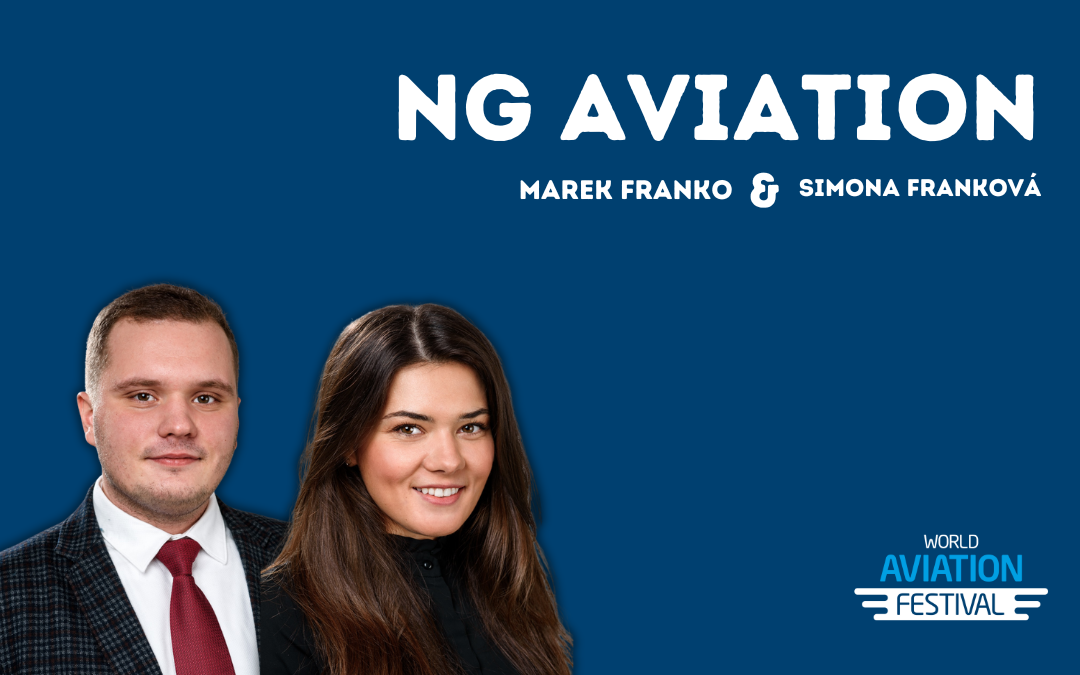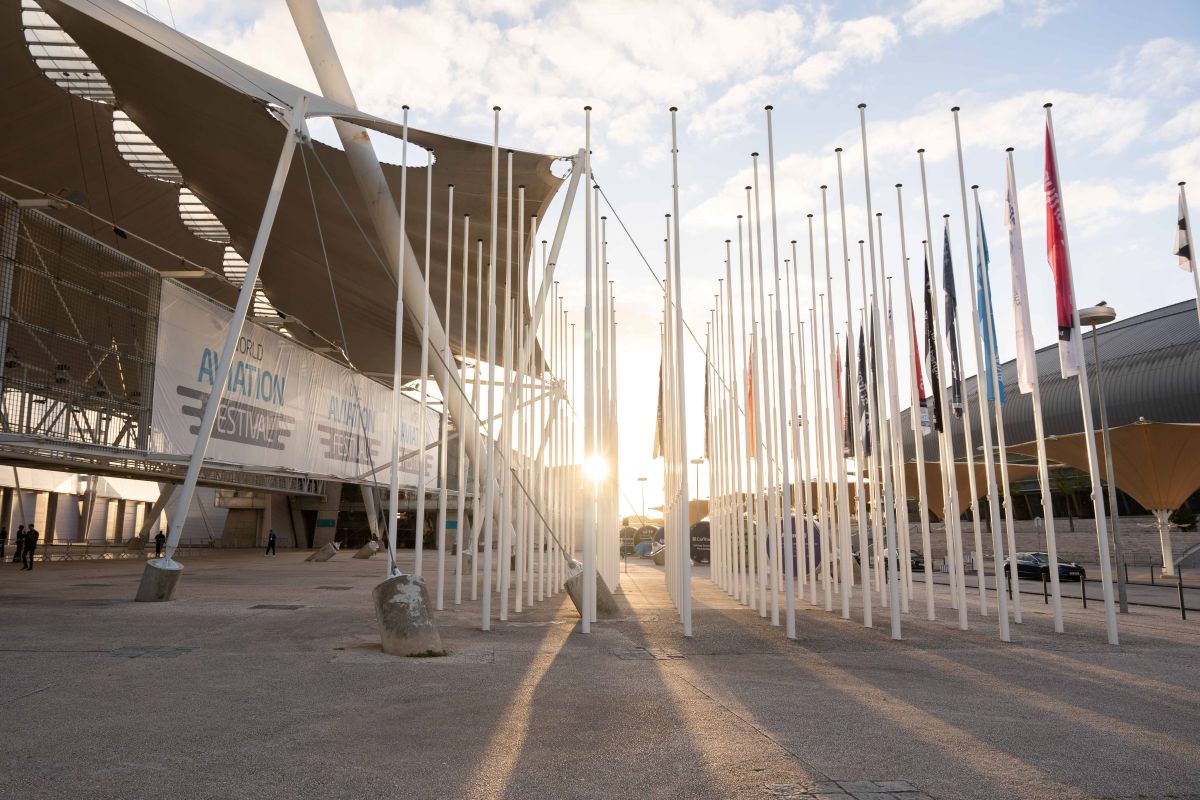
At World Aviation Festival 2025, I had the privilege of interviewing 30 high-level speakers from across the industry. Airport CEOs, airline directors, and tech disruptors all passed by my sofa over three jam-packed days in Lisbon.
It was fascinating to tap the insights of many notable industry figures. And over the course of the panels, presentations, and interviews, three key themes emerged from WAF25:
#1: AI has to be implemented strategically
As one interviewee joked to me, ‘every event is an AI event these days’.
Given the extensive discourse surrounding the tech’s potential impact on every industry, I wouldn’t blame anyone for feeling a bit AI-fatigued. The word has been thrown around so much in so many contexts that it’s become increasingly hard to distinguish hype from reality. And with reports circulating last week that the AI ‘bubble’ might be about to burst, you’d be forgiven for feeling somewhat sceptical.
Nevertheless, WAF demonstrated that AI is more than just a buzzword. Interesting use cases including American Airlines’ AI search tool, Qatar Airways’ award-winning app, and Dubai Airport’s document-free departures corridor all illustrate how AI can provide real value to passengers. Interviewees repeatedly emphasised to me the importance of establishing strong data foundations and selecting high-impact use cases before joining the AI race.
As the number of travellers goes up, automation will be critical to supporting staff, streamlining processes, and inspiring new journeys. Yet while tech adoption can be a tool for simplification, it has to be implemented with accessibility in mind. Whether it’s an app chatbot or an airport navigation tool, AI must be usable and useful to all passengers if aviation wants to see investment rewarded.
#2: The in-person experience remains critical
The conversation around digitisation has so dominated the industry in recent years that it’s been easy to forget that the in-person experience is still central to customer satisfaction.
Air travel remains a luxury for most passengers, and the romantic image of aviation continues to compel. While executives might get excited about a new AI tool, they cannot lose sight of how customers experience the physical world of aviation.
Exciting developments across the globe demonstrate ongoing commitment to making air travel feel premium and comfortable. SKYTOPIA, the flagship project at Hong Kong International Airport, will combine culture, leisure, and gastronomy to make the airport a destination in its own right. Discussions continued around the expansion of premium economy, as customers seek to enhance their experience with more ‘affordable luxuries’. And Gerri Sinclair from Vancouver International emphasised that the secret behind the airport’s customer service success is its friendly, well-trained staff and elevated in-person experience.
This ethos carries over to the loyalty landscape, where the best programmes the digital and the physical. Cristian Ortiz talked to me about the LATAM Pass app, and how it stands out for giving its members a choice of rewards that they can redeem inflight or at the airport. Meanwhile, the Air France-KLM Flying Blue programme demonstrates how a strong customer service strategy and redemption experience can give passengers that special ‘I’m on a plane’ feeling without costing them any money.
#3: The sustainability drive cannot slow down
Heading into WAF25, I was curious to see whether attitudes around environmental sustainability would have changed. Recent geopolitical developments and the attitude of the current US administration have sparked concerns that the zero-emissions drive had plateaued or was even being rolled back.
But everyone I spoke to stressed their commitment to their net-zero targets, whether they aimed to reach them in 2030 or 2050. From Groningen Airport’s Hydrogen Valley project to oneworld’s sustainable investment fuel (SAF) fund, a range of exciting initiatives are in the works that could advance sustainability efforts considerably. Also in the conversation was the potential of advanced air mobility (AAM), including discussions of how eVTOL air taxis might slot into airport operations.
Speakers across the event emphasised how sustainability remains essential, not only for environmental reasons, but for operational efficiency. Projects such as airport solar farms or airline food waste reduction all contribute to improved performance, self-sufficiency, and revenue, as well as sustainability.
However, decarbonising airports remains be less challenging than air travel itself. Many of the airlines I spoke to seemed to be putting their faith in SAF as the key to emissions reduction. Yet IATA warned earlier this year that SAF production will fall 100 million tonnes short of net-zero targets if production doesn’t ramp up soon. Aviation needs to put its money where its mouth is and significantly accelerate investment in SAF technology and infrastructure if the industry is to fulfil its promises. Greater attention should also be given to other net-zero solutions, including hydrogen fuel and hybrid engines: SAF is not a catch-all silver bullet that will fix aviation’s sustainability predicament.
Conclusion
Once again, WAF proved to be the most dynamic and forward-thinking event in the aviation calendar. The three key themes I’ve highlighted here are just a shortlist of the varied discussions that took place across the three days. Next year, we’ll be returning to FIL Lisbon for more industry-leading insight on tech adoption, customer experience, retail, and sustainability.
Join us at World Aviation Festival 2026!
For more like this, see: