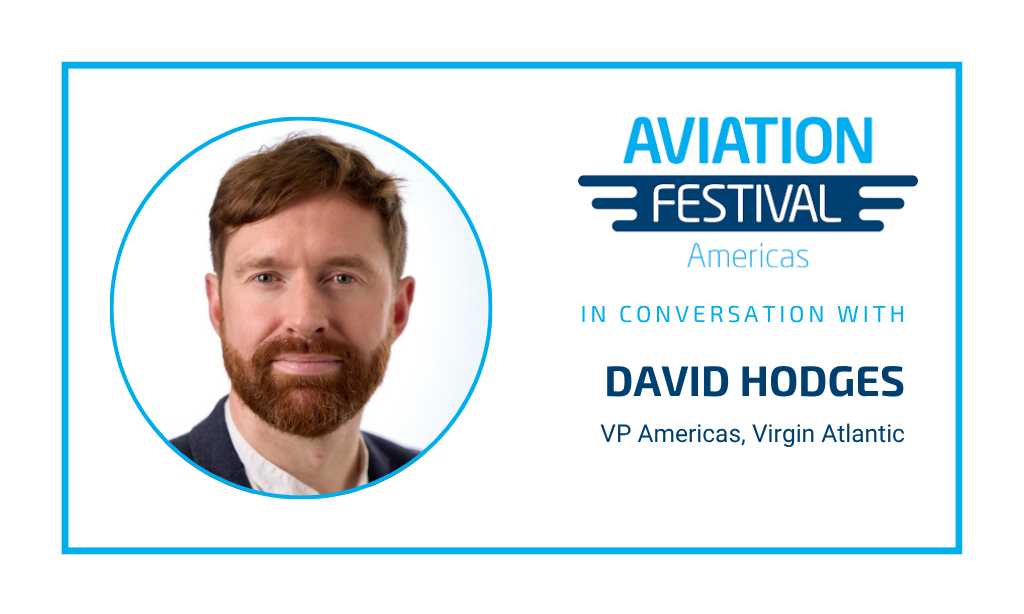
Although based in the UK, Virgin Atlantic are also growing a considerable presence on the other side of the ocean after which it is named. Partnerships with Delta Air Lines, WestJet, and Air France-KLM have supported the carrier’s rising status across the Americas and beyond, but on the highly competitive Transatlantic routes, airlines always need to be thinking of new ways to stay ahead.
At Aviation Festival Americas 2026, we sat down with Virgin Atlantic’s VP Americas, David Hodges, to unpack their current differentiation strategy. One key priority at the moment is loyalty, with Virgin in February launching a tongue-in-cheek status match campaign directed at British Airways Club customers. BA’s recent overhaul of their loyalty programme was poorly received by customers, and Hodges says that his carrier’s rival offer tempted ‘thousands’ of members to switch their points.
The critical thing is once they experience our programme, and particularly experience flying with us, that they stay with us, and that’s what we’ve seen from the results so far.
With loyalty offerings so important to both European and North American customers, Virgin Atlantic are working hard to ensure they meet expectations. Alongside tempting frequent flyers and premium passengers, the airline has debuted a unique scheme for those who travel less regularly. Under the High Five initiative, customers who fly with Virgin in five different years, even non-consecutively, earn 12,000 points.
The carrier’s commitment to reaching more travellers extends to its technology strategy. Earlier this year Virgin Atlantic became the first airline to launch its own booking app within ChatGPT, catering to evolving search and booking habits. Hodges believes that technology has become the major experience differentiator now most long-haul carriers offer premium economy and seatback screens:
The critical thing for us is that whatever we’re doing with technology, whether it’s investing in Starlink or the work we’re doing around AI, we keep that the human touch which Virgin is renowned for, alongside improving people’s personalisation of travel.
The Starlink rollout has begun already, and the highspeed Internet solution will be available on Virgin Atlantic’s entire fleet by 2027. For the time being, providing passengers with such high-quality WiFi serves as a market differentiator, but other carriers including American Airlines are also launching Starlink in the coming years. Hodges notes that Starlink connectivity is nevertheless worth the investment because of how it can improve customer service on ‘multiple levels’:
Starlink supports better interaction with our crew and teams onboard, and there’s also ways in which it can help provide a more personalised passenger experience and alternative revenue streams.
🎥 Watch the video to get the full interview with David Hodges.
Questions asked include:
- Virgin Atlantic are headquartered in Britain with a largely British customer base, but what’s your strategy in achieving a greater reach with customers in North America?
- In February Virgin went head-to-head with British Airways on loyalty through a status-match initiative. What kind of results did this campaign achieve and how do you think loyalty programmes can change the rules of competition on the very popular Transatlantic routes?
- You recently launched a Virgin Atlantic app within ChatGPT for travel booking. Have you seen an early results from this and how are you adapting your commercial strategy further in light of rising Gen AI adoption?
- When it comes to Starlink WiFi, how are you looking to build revenue from this sizeable investment?
Join us at World Aviation Festival 2026.
For more like this, see: