The aviation industry in Asia is moving faster than ever, driven by cutting-edge technology, bold collaborations, and a deep commitment to sustainable growth. The Aviation Festival Asia Awards 2026 are here to celebrate the organisations and initiatives that are redefining what’s possible in the region.
We invite you to recognise the organisations that have truly excelled this year across operations, customer experience, and digital transformation.
Award Categories
Sustainability Achievement Award: Recognizing outstanding commitment to environmental responsibility and sustainable practices in aviation.
Best Use of AI: Honouring exceptional application of artificial intelligence to improve operations, efficiency, or passenger experience.
Collaboration of the Year (Airline/airport/ground handlers only): Celebrating a successful partnership between airlines or between an airline and an airport that delivered measurable innovation or impact.
Industry Game-Changer: Awarded to an airline that has redefined norms, challenged conventions, and driven transformative change within the industry.
Smart Airport Journey Award: Recognizing an airport that has significantly enhanced the passenger journey through innovative technology solutions.
Digital Innovator of the Year: Awarded to a company, team, or initiative that demonstrated visionary use of digital tools or platforms to reshape airline or airport operations, customer experience, or service delivery.
Submissions are based on individual organisations and their groundbreaking achievements. While the award is for the company/organisation, we encourage you to mention individual people or teams in your submission if it helps illustrate the achievement; this will help us in reaching out to potential finalists.
The deadline for all submissions is Monday, Jan 19th.
Please note: To officially accept and receive an award at the ceremony during Aviation Festival Asia (March 25 – 26, 2026, Singapore), a representative from the winning organisation must be registered to attend the event
We can’t wait to recognise the achievements of the industry in Singapore!
Our Battle of the Airline Apps Asia competition is also open for submissions. This separate award honours the best in airline technology, customer service, and operational excellence. Be sure to vote for your favourite today!
Lufthansa Group have announced a new partnership with Swedish financial services firm Klarna for buy now, pay later booking.
Facilitated by technology company Adyen, the integration will allow Lufthansa Group customers to pay in full, pay later, or split the cost across multiple interest-free payments. Klarna already boats Qatar Airways and Booking.com among its travel partners, as the industry strives to offer consumers flexible, convenient payment options.
Oliver Schmitt, Head of Digital Customer Solutions Lufthansa Group, said:
At Lufthansa Group, we put the needs and a convenient booking experience of our customers at the center of everything we do. By leveraging our digital capabilities and partnering with Klarna and Adyen, we can now offer greater choice and flexibility in how customers pay for their journeys.
Operating over 991,000 flights in 2024, Lufthansa Group is one of the biggest aviation groups in Europe. Managing airlines including Eurowings, Lufthansa, and SWISS, the partnership with Klarna represents a significant payments upgrade for customers across Europe and beyond.
The Klarna payment options will be rolled out across the network by Q2 2026. Customers in Austria, Belgium, Denmark, Finland, Germany, the Netherlands, Norway, Sweden, Switzerland, and the United States will be the first to benefit from the partnership.
David Sykes, Chief Commercial Officer at Klarna, added:
Travel is one of the most meaningful investments people make. Together, we’re giving travellers the confidence to book their trips their way—with more flexibility, transparency, and choice than ever before.
Join us at World Aviation Festival 2026 to discuss the future of airline payments.
Revolut and Scandinavian Airline (SAS) have partnered to make RevPoints redeemable with SAS’s loyalty programme, EuroBonus.
Points can be exchange on a 1:1 basis, making it easy for Revolut customers to convert their everyday spending into rewards. Once converted into EuroBonus, points can be spent on flights, ancillaries, lounge access, experiences, and much more through SAS partners.
Aron Backström, VP Product & Loyalty at SAS said:
Revolut and EuroBonus are redefining how travellers engage with their everyday finances. Through this partnership, spending becomes a gateway to adventure, with EuroBonus points earned on routine purchases unlocking access to Scandinavia’s most sought-after travel rewards. Whether grabbing coffee or booking a flight, customers are now one step closer to their next unforgettable escape.
SAS joins a roster of 14 other airlines who have connected their loyalty programmes to RevPoints. These include Air France-KLM’s FlyingBlue, Turkish Airlines Miles & Smiles, and Qatar Privilege Club. Over 17 billion RevPoints have been redeemed globally since the scheme launched in 2024.
Christopher Guttridge, General Manager, Loyalty at Revolut said:
Our partnership with SAS reflects Revolut’s commitment to building a truly global loyalty ecosystem. By connecting RevPoints with one of Europe’s most established airline programmes, we’re giving millions of customers the power to turn everyday spending into extraordinary travel rewards.
Join us at World Aviation Festival 2026 to discuss the future of points, payments, and loyalty.
Biometrics and mobile booking emerged as the key rising trends in IATA’s latest annual Global Passenger Survey.
The 2025 edition analysed 10,000 responses from passengers across 200 countries, and found that over half of travellers had reported using biometrics at some stage in their journey. 85% said that they were happy with their experience, and 74% said they were willing to share more biometric information in advance to bypass passport checkpoints. Data privacy did emerge as a concern, but 42% of respondents who said they wouldn’t share biometric information would reconsider if they felt sure their details were secure.
Nick Careen, IATA’s Senior Vice President Operations, Safety and Security, commented:
Passengers are already using biometrics for different stages of their journey, from check-in to boarding. But to make the international travel experience fully digital, governments need to start issuing digital passports and enable their secure recognition across borders. When that becomes common practice, travellers, governments, and airlines will all see the benefits of digital identity with an experience that is even more convenient, efficient, and secure.
More passengers booking via mobile
Travellers in APAC and the Middle East were the most likely to book using mobile apps and pay by digital wallets, but adoption of the tech is increasing in other regions too.
While booking through airline websites remained the most popular method, favoured by 31% of respondents, this represents a decrease from the 37% recorded in 2024. App booking was especially preferred by younger travellers (25%).
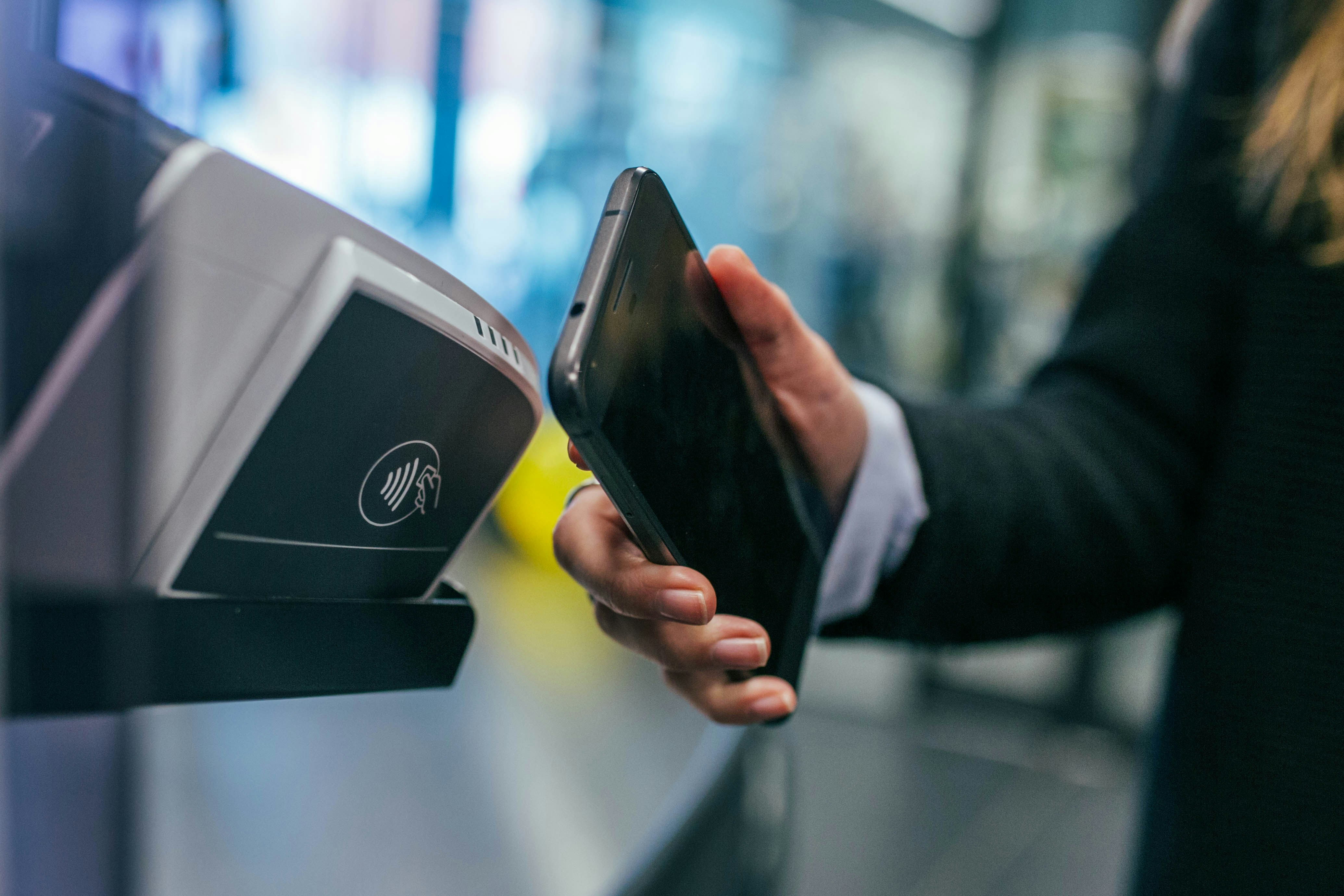
Credit and debit cards are still the most popular paying method (79%). However, digital wallet use has risen by 8% since 2024, used for payment by 28% of respondents. Enthusiasm for integrated, frictionless travel with mobile is high: 78% of passengers surveyed said they wanted to use a mobile wallet that had boarding passes, digital ID, and payment methods in one place on their phone.
Careen explained:
Passengers want to manage their travel the same way they manage many other aspects of their lives—on their smartphones and using digital ID. As experience grows with digital processes from booking to baggage claim, the message that travellers are sending in this year’s GPS is clear: they like it, and they want more of it.
Preferences differ by region, however. Travellers in Africa are still the most likely to book in-person at a travel agency, or over the phone. Trust in digital systems also remains an issue for European passengers, who showed the least enthusiasm for digital wallets (27% said they were indifferent or not interested).
Careen concluded:
There is an important caveat which is the need to continue building trust, so cybersecurity remains a priority. Cybersecurity must be core to the end-to-end digital transformation of how we book, pay, and experience air travel.
Join us at World Aviation Festival 2026 to discuss the latest in frictionless booking and payment technology.
Tesco Ireland and Aer Lingus have announced a new partnership that will allow Tesco Clubcard members to turn their points into Avios.
The supermarket’s Clubcard scheme allows shoppers to earn points for every euro spent in-store or online. Points are converted into vouchers, which can be redeemed with restaurants, attractions, and now Aer Lingus.
Every €2.50 in Clubcard points is now worth 600 Avios, the currency of Aer Lingus’s Aer Club. Customers can cash in Avios on flights, business upgrades, hotel stays, and car hire.
As we approach the 10th anniversary of AerClub, we’re more committed than ever to making the programme even more rewarding for our loyal members,
Through our new partnership with Tesco Ireland, members can convert Clubcard vouchers into Avios, allowing them to make significant savings on travel experiences. In real terms, this means a stroll down the aisles of Tesco brings you one step closer to the sun-soaked isles of Spain.
It’s a simple, rewarding way to make everyday shopping go the extra mile.
In their next Clubcard statement, Tesco Ireland will issue more than €7.5 million in vouchers to customers. If exchanged for Avios, this could pay for 400,000 customers to fly to Paris. Tesco joins a roster of other renowned brands, including Uber, Revolut, and the Bank of Ireland, who’ve partnered with Aer Club to give members more ways to earn Avios.
Aer Lingus is also a member of airline alliance IAG, giving passengers access to an even wider range of destinations through sister airlines. Rob McDonald, IAG Loyalty’s Chief Commercial Officer, added:
As the brand behind the loyalty currency Avios, we are dedicated to offering members the most rewarding experiences, allowing them to turn their everyday into their next holiday.
Thanks to this landmark announcement with Tesco Ireland, Aer Club members can now benefit from even more ways to collect and redeem Avios, underscoring our dedication to building one of the world’s most connected and rewarding loyalty networks.
Join us at World Aviation Festival 2026 to hear how leading loyalty executives are making their airline brand stand out.
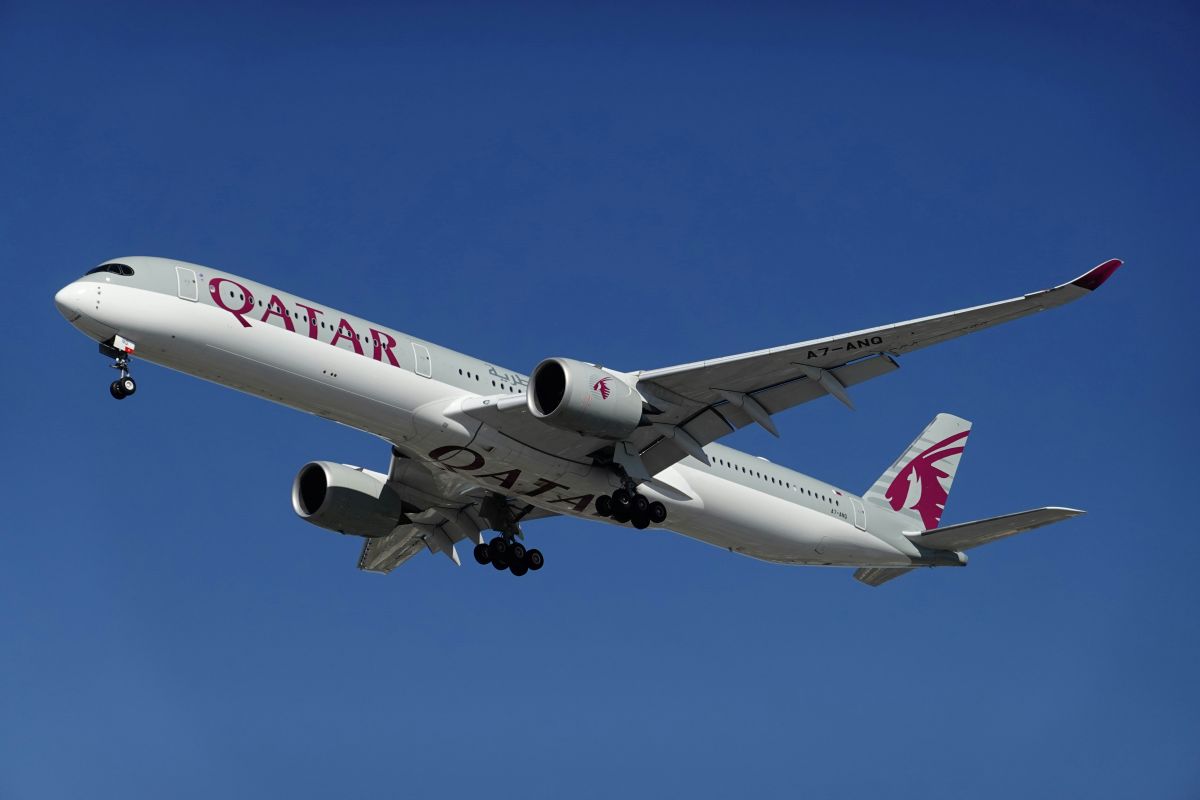
Qatar Airways has launched a new partnership with Klarna, the Swedish flexible payments provider.
Through Klarna, Qatar Airways customers across 17 European countries will now have the option to pay for their ticket in four ways:
Pay in full
Book now, pay in 30 days
Book now, pay in three interest-free instalments
Book now, pay in monthly instalments
The partnership with Klarna via WorldPay represents another step in Qatar Airways’ efforts to provide customers with tech-forward, personalised services that offer greater financial freedom when booking.
Qatar Airways’ SVP of Digital Commercial, Christophe Guittard, said:
This partnership reflects our commitment to customer empowerment and experience excellence. By partnering with Klarna, we’re making the Qatar Airways booking journey more convenient—giving our customers greater confidence and at the point of payment.
Klarna payment options will be incorporated in Qatar Airways digital storefronts in the UK, Ireland, France, Germany, the Netherlands, Spain, Italy, Portugal, Belgium, Austria, Switzerland, Sweden, Norway, Finland, Denmark, Poland, and the Czech Republic.
Several airlines have already integrated Klarna’s buy now, pay later software, including Cathay Pacific and TAP Air Portugal. Klarna’s Head of Western and Southern Europe, Raji Behal, commented on the Qatar Airways deal:
This partnership makes clear the growing global demand for greater flexibility and control when booking travel. With a single integration, Qatar Airways is now bringing Klarna to millions of travellers across 17 countries—providing a smoother, smarter booking experience that fits the way people prefer to pay today.
Join us at Aviation Festival Asia 2026, where our dedicated track will be discussing how airlines can innovate payment experiences.
For years, airline payments sat quietly in the background. They were treated as plumbing – necessary, but not something leadership would spend much time on. That has shifted. Today, payments influence how customers book, how revenue is captured, and even how airlines compete.
A new whitepaper from Edgar, Dunn & Company (EDC) looks at this shift in depth. It argues that payments should be considered a strategic function, not just an operational one and that airlines have much to gain from taking a more deliberate approach.
Payments as more than a cost
Margins in aviation are famously slim and payments have not always had much attention. Yet they make up about 2.2% of airline revenues – more than US$22 billion globally. EDC’s analysis suggests those costs can often be trimmed by 10–20% through better acquiring terms and more active management of payments.
The other side of the story is revenue. Payments affect conversion, market reach, and ultimately customer loyalty. Offering local payment methods, providing installment options, or simply ensuring approval rates stay high have a direct impact on sales. In many cases, airlines leave that value untapped.
Where airlines struggle
Based on decades of project work, EDC highlights seven key issues and pain points airlines face as highlighted below.
Seven Key Payment Challenges for Airlines
High acceptance costs, often driven by virtual card processing fees or legacy acquiring contracts, are a key issue for airlines. Another is missed opportunities by not supporting the payment methods customers actually prefer. There are also internal issues. In some airlines, no single team owns payments. Infrastructure has grown in silos, making it hard to innovate quickly. And data, while abundant, is often fragmented. Approval rates, fraud levels, and the true cost of acceptance remain opaque. None of these problems are unique to one region or type of carrier, they crop up across the industry.
The changing environment
It is not just internal complexity that makes payments a pressing topic. The external environment is also moving quickly:
Customer expectations are shifting, with digital wallets, flexible rebooking, and instalment plans becoming standard in many markets.
Technology innovation has accelerated, from payment orchestration to contactless check-in and in-flight payments.
Regulation continues to evolve, whether through PSD3 in Europe, Strong Customer Authentication, or central bank digital currencies.
And on the provider side, new entrants, models and changing acquirer strategies are reshaping the landscape.
The result is that payments can no longer be managed as a static process. They require ongoing monitoring and adjustment.
What airlines are doing
Case studies in the report underline the significant potential impact of payments. One airline discovered its indirect sales approval rates were running at 50-60%, well below the industry benchmark of 80% or more. Another achieved 10-20% savings by renegotiating acquiring contracts with local providers.
Some carriers are also moving into issuing. AirAsia has embedded a digital wallet into its “super app,” which has supported both refunds and ancillary sales. GOL in Brazil has built co-branded credit card partnerships with several banks, widening reach and boosting loyalty. And Air France-KLM recently worked with Nium on a virtual card solution for B2B payments, cutting costs and easing reconciliation.
These examples suggest payments can do more than trim costs. They can help strengthen loyalty, open new revenue streams, and improve resilience.
The role of governance
One of the clearest messages from the whitepaper is the importance of governance. When no one “owns” payments inside the organisation, projects move slowly and opportunities are missed. Airlines that have introduced a dedicated Head of Payments, backed by a cross-functional governance committee, have seen faster rollouts and better alignment between commercial teams and IT.
Looking ahead
The industry is moving towards modern retailing models such as NDC and Offers & Orders. Payments will be a central part of that transition. Orchestration, stronger data management, and closer links with loyalty schemes are all likely to become standard.
For airlines preparing for 5.2 billion passengers in 2025, even small improvements in payment conversion or cost efficiency matter. A single percentage point can translate into millions of dollars. Payments are no longer background plumbing. They are part of the storefront and Edgar, Dunn & Company would be pleased to assist you capturing all the opportunities related to payments.
Founded in 1978, Edgar, Dunn & Company (EDC) is an independent global payments consultancy, advising clients in more than 45 markets each year. EDC’s Travel Payments Practice, established in 2002, works closely with airlines, hotels, OTAs, and payment providers worldwide to design and implement strategies that optimise payments across cost, revenue, and customer experience.
One year ago, I wrote about the idea of a “New Payment Capability (NPC)”, mirroring the modernisation of airline distribution brought by the New Distribution Capability (NDC). In both cases the underlying trend is clear: airlines use modern technologies to better serve customers.
According to a 2022 study by Edgar Dunn for IATA, payment costs represent 2.2%, or US$22 billion, of airlines revenues, with a revenue upside still overlooked. At the same time, airlines mainly focus on operational issues, such as payment acceptance, payment governance, or payment data management.
Coincidentally, earlier this year, the IATA Annual General Meeting featured for the first time a panel about payment. Traditionally, airline CEOs gather to discuss topics like leadership, profitability, geopolitical developments or sustainability. The fact that payment now sits alongside these strategic issues show that the topic has risen in importance.
Today, just weeks before the World Aviation Festival opens in Lisbon, I take again the pulse of airline payments. I see an interesting convergence between payment and two other major trends: airline retailing and artificial intelligence. Retailing is reshaping airline commercial, financial and IT functions, while AI is transforming every sector with some bold or radical solutions.
Airline retailing and payments
Let’s look at the main drivers behind airlines’ growing interest in retailing and how they impact payment. Airlines want:
Customer satisfaction and cost savings. For cost and convenience reasons, and to improve customer choice and experience by accepting alternative forms of payment, airlines want to accept alternatives to credit cards. Modern retailing platforms make this possible.
Transparency and control. Payment orchestration allows airlines to manage multiple payment solutions efficiently across channels, with full visibility to reduce costs. This capability is supported by modern retailing.
Payment and settlement across channels. Order management systems can seamlessly handle payments from direct channels and settlements from indirect channels, such as travel agencies and interline partners.
These retailing drivers led airlines to support the creation of the IATA Financial Gateway, designed to orchestrate payment and settlement solutions in a retailing environment.
In the corporate travel market, travel managers still use credit cards to pay for millions of dollars of airline tickets, whereas most other corporate spend is paid by bank transfers. Expanding the orchestration of multiple payment methods will provide offer corporate buyers more options.
In the leisure market, the adoption of alternative forms of payment progresses step by step. A typical sequence may be:
mobile wallet, such as Apple Pay.
installments, such as Buy-Now-Pay-Later.
convenient solutions like split payments or group payments.
crypto payments.
Each payment method requires a specific business cases and careful implementation, which require close monitoring.
Payments with AI
Artificial intelligence (AI) now underpins many aspects of airline payments and settlements, with each new breakthrough creating opportunities for enhanced financial processes.
Fraud detection and prevention has been an early and effective use case for AI in airline payments. Unlike traditional rule-based systems that search for pre-determined signals, AI algorithms learn from historical data and can predict with high accuracy which transaction are likely to be fraudulent.
In payment orchestration, AI can steer real-time decisions to reduce costs and to improve authorisation rates. Further in offer creation, AI can dynamically bundle the most relevant payment options with each offer to maximize conversion.
Looking ahead, the rise of agentic AI – virtual assistants capable of planning and booking trips on behalf of travellers – means that payment controls will increasingly be performed by machines rather than humans. This agentic shift – to AI agents, not travel agents – will generate new fraud scenarios (how to authenticate the agent of a traveller?) requiring new AI-powered fraud detection mechanisms.
Conclusion
In this article I argue that in 2025 airline payments have become a strategic issue discussed at the highest levels of airline leadership, alongside themes such as airline retailing and artificial intelligence. Like any other strategic topic, payments should be assessed through their impact on revenue, cost and customersatisfaction. This strategic positioning calls for a new roadmap aligned with broader industry trends, recognising that payments are no longer just a cost of doing business tied to credit card acceptance and acquirer management.
Join us at World Aviation Festival 2025, where Eric will be chairing our AI Spotlight Sessions.
Edgar, Dunn & Company, strategy consultancy specialised in payments with dedicated expertise in travel and airline payments, shares its perspectives on airline payments.
Throughout 2025, Edgar, Dunn & Company (EDC)’s travel payments practice continues to explore the evolving role of payments in the airline industry. The first article presenting an overview of key pain points for airlines can be accessed here. Following our discussions on payment acceptance, this article shifts focus to a frequently overlooked lever for growth and differentiation: issuing opportunities for airlines.
While most airlines have invested considerable effort in optimising payment acceptance, far fewer have capitalised on the opportunities that lie in issuing their own payment products. This gap is surprising, and strategic. Airlines enjoy a unique position of trust with their customers and partners such as travel agencies, possess rich behavioural and transactional data, and already operate robust loyalty programmes. And yet, most airlines have not fully explored how issuing solutions can support customer loyalty, improve margins, and unlock new revenue streams.
The missed opportunities in issuing
Compared to other sectors, airline-issued payment products are still underdeveloped. Working closely with our clients across the globe, we observe four recurring challenges that have limited the development of issuing programmes:
Limited product offerings by audience segment: airlines rarely differentiate their issuing solutions across customer segments. Consumers, business travellers, corporate buyers and travel agents all have different payment preferences and needs yet often face a one-size-fits-all payment offering, if any.
Disjointed payment and loyalty ecosystems: while many airlines operate sophisticated loyalty programmes, these are seldom integrated with payment tools. As a result, opportunities to drive engagement, capture data, or reward spend in real time are lost or not optimised as much as they could be.Yet, other industries offer compelling inspiration. For example, in Episode 44 of our EDC Podcast, Suryaveer Singh, Head of Loyalty, CRM and Data Analytics at Emirates National Oil Company (ENOC), discusses how their Yes Rewards programme successfully integrates loyalty and payments to engage customers beyond core services, creating value through data-driven strategies and cross-sector partnerships. This kind of approach offers a blueprint for how airlines could better align loyalty and payment ecosystems.
Lack of a tailored issuing model: airlines often rely on “traditional” co-branded credit cards issued via third-party banks or financial institutions and targeting consumers. These partnerships generate revenue through sales of miles to issuers, but the model can be suboptimal and could be more tailored for other segments. EDC encourages airlines to consider a wider range of issuing models depending on their strategic objectives and which segments they want to focus on.
No issuing strategy or ownership: in many airlines, issuing is not treated as a core product or strategic lever. There is often no internal sponsor, roadmap, or cross-functional coordination. As a result, issuing initiatives are fragmented or seen as marketing-led rather than product-driven limiting their ability to scale, adapt, or deliver long-term value. Clear ownership and product thinking are critical to unlock the full potential of issuing solutions.
As passenger confidence and travel volumes are back to pre-Covid levels, the time is ripe to rethink how issuing can support broader commercial goals for airlines.
Why issuing matters, now more than ever
The traditional airline business model is under pressure. With operating costs rising in many cases and price competition intensifying, airlines must look beyond fares to drive differentiation, profitability and generate new revenue streams. Issuing can support three strategic objectives:
Strengthening customer engagement: payment products embedded in mobile apps or integrated with loyalty programmes increase usage frequency and deepen brand affinity.
Enhancing spend visibility and data: issued products give airlines access to transaction-level data beyond ticket sales. This data can be used to personalise offers, create ancillary bundles, and better understand non-travel-related spend patterns.
Capturing new revenue streams: depending on the issuing model, airlines can benefit from a range of revenue sources, including card fee revenue, transaction fee revenue, FX margins, etc.
Where the market is moving and how airlines explore issuing to unlock new value pools
A few airlines have already started to explore issuing opportunities, often in collaboration with fintechs, traditional banks, or BaaS (banking-as-a-service) platforms. Though still relatively rare, these initiatives highlight the flexibility of issuing models and the wide range of card products that airlines can leverage, such as traditional co-branded cards to enhance loyalty, UATP cards designed for corporate travel, SME-focused cards and virtual cards for simplified business payments, prepaid gift cards aimed at consumers, stored-value cards for travel credit or ancillary services, and multi-currency cards to support international travellers.
Some examples illustrate how these different models can be applied in practice:
AirAsia has integrated a digital wallet into its “super app” ecosystem, which operates across several Southeast Asian markets, including Malaysia, Thailand, Indonesia, and the Philippines. The wallet, branded as AirAsia pocket, enables customers to store refunds, purchase ancillaries like baggage or meals, and pay for non-travel items across lifestyle merchants, aiming to streamline in-app payments and encourage repeat usage. Following this, the Super App saw a 236% year-over-year increase in monthly active users, reaching over 10.6 million in Q2 2022, with average transactions per user increasing from one to seven. In Q1 2024, non-aviation businesses generated over $132 million, contributing 12% of total group revenue.
GOL Linhas Aéreas has leveraged its Smiles loyalty programme through co-branded credit cards issued by multiple major Brazilian banks, including Bradesco, Banco do Brasil, and Santander. This multi-bank partnership model is particularly innovative, as most airlines typically rely on a single co-brand issuer. By engaging several banks, GOL has significantly expanded the reach of its credit card offering, tapping into a broader range of customer segments and acquisition channels. These cards allow customers to earn Smiles miles on everyday spending and have helped grow the programme’s user base, particularly among leisure travellers. With over 20 million members, Smiles has become a key driver of customer loyalty and ancillary revenue.
United Airlines, in partnership with Chase, offers co-branded credit cards specifically tailored to small businesses in the US. These products include business-focused spend categories, employee card controls, and deeper integration with United’s loyalty programme. This segmentation approach goes beyond consumer co-brands and aligns more closely with the travel needs of SMEs.
Air Canada issues UATP accounts through its ACGlobe and ACGlobePlus programmes, providing travel agencies and corporate clients with a centralised payment solution for air travel in Canada. This positions Air Canada as both a carrier and a B2B payment issuer within the corporate travel ecosystem.
Air France and KLM have partnered with Nium to roll out Nium Airline Payments (NAP), a “closed loop” virtual card solution targeting travel agents. NAP replaces traditional card schemes with UATP rails and bank transfers, enabling lower payment costs, faster settlement, and simplified reconciliation. The solution gives airlines more control over B2B payments and strengthens their commercial relationships with selected agents, starting with a rollout in Italy.
While such initiatives are not yet widespread, they reflect growing interest in bringing issuing closer to the core airline value proposition. Success will depend on aligning the issuing model with each airline’s commercial priorities, technical capabilities, and market context.
Choosing the right issuing model
There is no universal blueprint for issuing success. Airlines must first define their strategic objectives such as strengthening relationships with specific customer segments, collecting actionable data, generating cost savings, or developing new revenue streams. They must then carefully evaluate different models along three key axes:
Who? Customer segmentation: a robust issuing strategy caters to distinct customer profiles, from high-frequency travellers who require rich, comprehensive features to occasional fliers who prefer simple, digital-first tools. Airlines must segment their customer base by needs, geography, and the types of airline products they use, and tailor issuing products accordingly.
What? Product features: issuing a payment product can include many features ranging from “basic” payment functionalities all the way to broader financial and/or travel-related services. Product features must address the full range of customer needs. Every touchpoint – before, during, and after travel – should be designed with issuing products in mind, enhancing both the value proposition and the customer experience.
How? Control vs. delegation: there are implementation options that provide full control over the payment experience and data, e.g., opting to work with BaaS providers or becoming a UATP issuer vs. delegating to bank partners under white-label arrangements. Airlines should evaluate their role in the issuing value chain, deciding which activities to own, where customer interaction or strategic value is high, and which to outsource to partners.
Four best practices to unlock issuing opportunities
Based on our global consulting experience, including multiple engagements with airlines across the globe, Edgar, Dunn & Company has developed a proven set of best practices to help airlines leverage issuing opportunities:
Conduct an issuing opportunity assessment: map out customer needs, behavioural patterns, and current gaps in payment journeys. Use data to prioritise use cases with the highest ROI to decide whether and where to issue payment products.
Build a clear implementation roadmap and go-to-market plan: for instance, identify how to avoid operating loyalty and payment in silos and how to market issuing products.
Choose the right partners: whether through a fintech, bank, payment scheme or a BaaS provider, airlines need to ensure partners align with strategic priorities, commercial ambitions and technology roadmap.
Pilot, measure, iterate: an agile and iterative approach has proven effective for airlines. Start small, test quickly, and scale what works. Issuing is not a binary decision but a continuum of initiatives that can evolve with customer needs and business maturity.
These best practices are at the core of what Edgar, Dunn & Company proposes to its airline clients as part of dedicated issuing strategy projects, combining deep payments expertise with practical support.
Conclusion: from missed potential to strategic asset
Issuing is no longer just for banks. For airlines, it represents an untapped commercial lever that can enhance customer experience, support loyalty, improve data insights, generate cost savings and unlock new revenues. As the boundaries between travel, payments, and digital services blur, the time has come for airlines to include issuing in their payment’s strategy.
In our next article, we will explore the critical organisational questions airlines face in managing their payment functions. Who “owns” payments, and how should internal governance adapt to reflect payments’ growing strategic importance? Stay tuned for our next article: Governance matters, structuring payment ownership inside airlines.
Edgar, Dunn & Company is a global strategy consulting firm specialising in payments and financial services. Since 1978, we have partnered with clients across the globe and developed an unrivalled depth in specialist expertise, with specific expertise in airline and travel payments. We offer a truly independent voice and our vision is to be the most trusted global payments consultancy. Today, we serve clients in over 45 countries through our global office network in North America, Europe, Middle East and Asia Pacific.We help organisations (e.g., airlines, hotels, travel agents, car rental operators and payment providers) navigate the complex payments and fintech ecosystem, identify opportunities to accelerate profitable revenue growth, and drive their competitive advantage.
Edgar, Dunn & Company, strategy consultancy specialised in payments with dedicated expertise in travel and airline payments, shares its perspectives on airline payments.
In the past, payments operated like plumbing — hidden in the background and only noticed when they failed. For many merchants including airlines, they were viewed purely as a cost. Today, payments are becoming an integral part of the storefront, attracting customers, influencing their experience, and driving sales. In other words, payments are not just an expense, but also a key revenue driver to create new customer journeys.
On the cost side, payment in the airline industry has been an overlooked cost driver. Yet, it represents approximately 2.2% of airlines’ revenues – amounting to $22 B globally as evidenced by a study led by Edgar, Dunn & Company for IATA.
On the revenue side, payment has been even more overlooked. Some airlines do not even maximise their market reach via local payment methods or instalment payments, or suffer from low conversions due to below-par payment processes.
With a dedicated Travel Payment practice since 2002 as part of its global payments consulting services, Edgar, Dunn & Company (EDC) has over two decades of experience working with travel-related actors, and more specifically with airlines ranging from global carriers to regional airlines as well as with airline industry stakeholders such as IATA or UATP. Based upon these consulting engagements in all regions across the globe, we have identified seven payment issues affecting the airline industry. The seven issues – shown in the table below – are key pain points or emerging needs that need to be addressed by airlines.
These seven payment issues have been organised around four themes:
A. Payment acceptance
B. Payment issuing
C. Managing (“internal organisation”)
D. Processing (“technology & processes”) payments.
This classification is particularly relevant because payments impact multiple business units within airlines. This ranges from digital / e-commerce, distribution, IT, marketing to finance and revenue accounting. While organisational structures vary across airlines, clearly defining ownership of payment responsibilities is crucial.
The identified payment issues do not exist in isolation. They emerge from a complex and continuously evolving payments landscape. Four key drivers of change shape this landscape, each introducing new opportunities (or threats!) that airlines must navigate:
These drivers create a dynamic environment where payments strategy and operations must constantly adapt. While not exhaustive and varying by countries and regions, the examples mentioned above represent key patterns observed across the industry.
The interplay between these external drivers of change and internal airline operations helps explain why payment issues persist despite efforts to address them. Understanding this context is crucial. It demonstrates that payment issues often stem from structural market changes rather than operational inefficiencies alone.
While these payment issues are common across the industry, EDC recognises that solutions must be tailored to each airline’s specific context. Factors such as airline size, payment operations maturity, market competitiveness, strategic priorities (growth vs. profitability), and home market conditions all influence the optimal approach.
EDC’s Travel Payment practice will share its perspectives on each of these seven payment issues and their potential solutions in a series of articles, leveraging its independent position and end-to-end understanding of the airline payment ecosystem across regions. Unlike generic industry reports, this series is based on real-world consulting engagements, offering actionable insights tailored to the specific challenges faced by airlines.
Each article in this series will follow a structured approach: first examining the payment issue in detail, then illustrating it through real-world examples from EDC’s experience. And we will explore potential solutions.
Through this exercise, EDC’s Travel Payments practice aims to raise awareness on common payment issues in the airline industry while demonstrating the strategic importance of airline payment strategies and operations.
As an airline, are you actively monitoring and managing your payment costs? And are you investing in payments to enhance customer experience, unlock new revenue streams, and gain a competitive edge? We hope this series of articles will help airlines move payments from the boiler room in the basement to the shop window.
We value industry dialogue and shared learning. If you have insights or perspectives to contribute, feel free to reach out to us at travelpayments@edgardunn.com and connect directly with us: Louis Wapler, Pascal Burg and Greg Toussaint. We would be happy to arrange a discussion and exchange ideas.
Stay informed with the latest insights on travel payments – subscribe to our newsletter here.
Edgar, Dunn & Company is a global strategy consulting firm specialising in payments and financial services. Since 1978, we have partnered with clients across the globe and developed an unrivalled depth in specialist expertise, with specific expertise in airline and travel payments. We offer a truly independent voice and our vision is to be the most trusted global payments consultancy. Today, we serve clients in over 45 countries through our global office network in North America, Europe, Middle East and Asia Pacific.We help organisations (e.g., airlines, hotels, travel agents, car rental operators and payment providers) navigate the complex payments and fintech ecosystem, identify opportunities to accelerate profitable revenue growth, and drive their competitive advantage.
AirAsia MOVE, the award winning online travel platform for Capital A, revolutionised user experience. The platform enables customers to book all travel in one app and leverages cutting-edge technology to deliver a seamless user experience.
At Aviation Festival Asia, Air Asia MOVE CEO, Nadia Omer shared some of the key pillars to the platform’s success including a nuanced understanding of the target market, using airline origins as a springboard, and applying fintech.
Discussing Air Asia MOVE’s industry leading ancillary sales, Omer said:
“[Being an OTA with airline origins is] a big advantage because we know where the airlines are coming from. A lot of our development has happened on the sites with integration with the airlines. One thing in particular which I would say that we do better than any other OTA is ancillaries. We have developed the middleware to make sure that all of those ancillary choices and algorithms are there to make the most of the ticket and we are able to attach seats, meals, baggage etc. We are the OTA with the highest ancillary attach rate at 65 percent. The majority of OTAs, they shuffle between 20 and 25 per cent.”
Watch the full interview below to learn how AirAsia MOVE is capitalising on the changing passenger landscape and learn what Omer sees as the next generation of rewards.
AirAsia MOVE is primarily focused on budget travel. Can you explain what defines this and how it is built into your model?
Of course, AirAsia MOVE has the rare advantage of being an OTA with airline origins. How does this impact the way you collaborate with your airline partners?
We are seeing passengers become less dedicated to individual airlines. What is underpinning this and how are you capitalising on it at AirAsia MOVE?
Last year we spoke about the growing popularity of fintech and around August you were looking at making a move to blockchain. How do you see blockchain enhancing the AirAsia MOVE ecosystem?
For more onsite at Aviation Festival Asia 2025 see:
Airline payment remains a prominent topic of discussion within airline commercial and financial teams.
As McKinsey[1] summarised back in 2022, airline payment costs sum up to USD20 billion annually, representing up to three percent of airline revenues – a significant value in an industry that often only achieves a very low profitability. The volume is huge, with about three billion transactions per year facilitating a turnover of about one trillion dollars.
It is too easy to view airline payment simply as a cost factor. The handling of payment is an important part of the customer experience, and McKinsey also assumes that up to USD12 billion in additional revenues can be achieved for airlines annually if consumers can make payment more easily and efficiently in numerous ways.
Of course, the true values of these numbers can be discussed, but it is obvious that airlines need to focus on their capabilities to receive payment in an easy, inexpensive and safe way.
Airline payment as an enabler for an airline’s strategy
To achieve this, airlines often implement “payment strategies”. Personally, I am struggling a bit with the term “strategy” when it comes to airline payment. After running numerous airline payment engagements, I believe that there is no “airline payment” strategy per se. Payment need to contribute and be embedded into an overall airline commercial strategy and is a key business enabler ideally increasing conversion while reducing cost and risk.
Airlines’ overall strategies can be fundamentally different, such as if the airline follows a full-service carrier (FSC) business model or, at the other extreme, that of a pure low-cost carrier (LCC) with no frills. This has direct implications for airline payment and needs to be assessed case by case.
In addition, there might be shorter term airline strategies that have an impact on how to run payment. An airline may decide to enter a new market and therefore focus on high conversions by taking a higher payment risk, as well as for instance enabling local APMs, leading to higher complexities.
In essence, these approaches are defined by the airline’s strategy and not by the payment process. Therefore, they cannot be regarded as solely a payment strategy since airline payment is “only” the enabler of the overall strategy.
However, how is a payment set up embedded into the overall commercial strategy? Let me share a real-life step-by-step project approach, which has delivered the desired results.
A phased approach to embed airline payment
First, we analyse and audit the current payment setup, by taking a closer look at the balance between conversion, risk and cost. It also makes sense to investigate the organisational setup of the payment team, e.g., does it reside in finance, e-commerce, distribution or even sales? Addressing other questions such as how the payment architecture looks, who are the main payment suppliers and how they are governed, is also essential. By benchmarking the results, airlines will often be able to gain some tactical quick wins.
In the second step, the overall airline commercial strategy is taken into consideration. What are the guidelines and requirements for payments to enable the overall commercial strategy? What would a strategically fitting payment setup look like? What are the gaps between the desired state and the status quo? How do we get there?
Thirdly, the exercise should focus on implementation and execution. With the view on the current set up, the desired state for payment fully supporting the airline commercial strategy, a detailed roadmap to close the gaps can be established and executed, through change management. At this stage several questions can be addressed such as organisational structures, make or buy decisions, vendor and partner selections, just to name a few.
Of course, there is no recipe that fits all airlines when it comes to their payments. But with the overall approach summarised above, airlines can enhance their payment process through enhancing conversion while reducing cost and risk, with the ultimate goal to be the enabler for the airline’s commercial strategy – payments are there to support, but they are not a strategy by themselves.
Aviation has one of the highest cart abonnement rates across industries, with 9 out of 10 airline ticket shopping carts left incomplete. One of the reasons behind this concerning number is the absence of consumers’ preferred payment methods.
Wizz Air has partnered with Revolut to simplify payments for passengers. The Hungarian low-cost carrier is giving its customers access to secure, one-click checkouts, starting with the app and progressing to the website in the coming months. Passengers will have the option to complete payments in seconds using biometrics and secure payment through the Revolut app.
Speaking on the announcement, Alex Codina, General Manager of Acquisition at Revolut, said:
“We are so excited to have Wizz Air on board as a Revolut Pay partner and to support them with making the customer journey as seamless and secure as possible from start to finish. Especially in the travel sector, payment processes can be extremely complex and long. We believe this should not be the case, and partnering with trusted and innovative brands like Wizz Air allows us to keep building the future of payments in the industry together.“
Revolut is also giving customers the opportunity to earn 10 times more RevPoints when purchasing Wizz Air flights.
The Wizz Air-Revolut partnership is a step toward solving the airline industry’s long-standing payment challenge: balancing security, conversion, and cost efficiency. Where payment costs represent up to 3 per cent of airline revenues, even small improvements in conversation rates can have a significant impact. Find out more here
Two weeks ago at Aviation Festival Asia, I had 1:1 interviews with 21 key decision makers from across the APAC region. These conversations featured airline and airport CEOs, cutting-edge technology providers, and industry experts shaping strategy in their field. I spoke to these pioneers about their ambitions, challenges, and perspectives on the evolving industry landscape – here is what they had to say:
Personalisation – Where expectations are being shaped by retailers like Amazon, aviation is lagging behind. Passengers want airlines to know and understand them and this increasingly important to the younger generations who demand a hyper-personalised service. The solution? Data – and lots of it.
Artificial intelligence (AI) – The buzz around AI and gen-AI is not going anywhere. With AI being leveraged by almost every aspect of the industry, we are now seeing the numbers to support its impact. However, with technology evolving so rapidly, some decision makers are cautious of leaping from one “shiny thing” to the next and want to make sure their tech investments are future proof.
Offer & Order – In summary, the offer side has come a long way and is generating tangible value but progress on the order side is slow and remains in the proof of concept phase. Despite this, we have seen significant strides already made in this journey and the mood for 2025 is optimistic.
Loyalty – Today, consumers are more sophisticated than ever, but loyalty programmes remain outdated. This means there are real opportunities for those that can understand the behaviour of the modern traveller and update effectively.
Sustainability – The industry’s commitment to sustainability has to go beyond reducing its carbon footprint and a holistic approach to the challenge is not just preferable, but imperative.
Be proactive – When it comes to service, convenience is everything. Passengers want problem resolution at their finger tips, in real time and do not expect to have to call a contact centre to explain their problems. Airlines and airports that can can provide seamless, instant support have a major opportunity to establish brand loyalty.
Apps matter – Apps are a powerful tool for both airlines and customers. If they are deployed correctly, they can be the key to unlocking customisation and serve as a crucial touchpoint for engagement.
Subscribe for free to the World Aviation Festival newsletter to get the interviews sent straight to your inbox as they get released.
Aviation Festival Asia is the region’s most important aviation technology conference and exhibition, connecting pioneers with key stakeholders and tech suppliers. The sessions bring together world class speakers from across Retail & IT, AI, Sustainability, Payments, Airport Tech, Marketing, Loyalty, IFEC, Passenger Experience, and IROPs.
As Aviation Festival Asia is taking place in Singapore (18-19 February 2025), one of my favourite destinations in Asia, let’s explore the trends that makes this fascinating region so dynamic.
The Asia Pacific region had the strongest passenger traffic volume (measured in Revenue Passenger Kilometres) growth in 2024 according to IATA data, with a 16.9% growth compared to 2023. This growth is much stronger than the usual global annual growth, around 5%, which shows that the region was still in recovery from the COVID pandemic. Detailed figures suggest that markets like China and India have seen domestic not only recover, but even grow compared to 2019, with respectively 20.2% and 11.7% growth, whereas Australia or Japan are close to 2019 levels.
Besides the strong growth of the region, driven by the world’s two most populated countries, I’ve identified four trends that set this region apart from the rest of the world air travel:
Mega aircraft orders
Airline mergers and creations
Travel lifestyle marketplace
Alternative payment methods
Mega aircraft orders
Before the pandemic, the largest aircraft order belonged to Emirates, including the double decker A380 and other B777s. In 2023 the two main Indian carriers, IndiGo and Air India, announced respectively 500 and 470 aircraft ordered. These record-breaking orders are not a coincidence but reflect India’s economic growth and the relevance and increasing role of air travel as a mode of transport adapted to this geography. India is approximately 3000km wide north-south and east-west, whereas China is roughly 5 by 5 thousand kilometers and USA 5 by 3 excluding Alaska.
The orders are a sign of the growing economy in India (about 7% annually pre-pandemic and last two years) and a confidence in related travel demand. A 7% annual growth rate means that air traffic volume will double in 10 years. This impressive growth in travel demand will impact the entire value chain: travel sellers, airports, travel service companies, transportation to airports, etc. Unless infrastructure investments follow the demand, the rollout of the airline capacity may be chaotic.
Airline mergers and creations
In India, Air India not only placed a massive aircraft order but also merged, following the acquisition by Tata Group, with Air India Express, Vistara (jointly owned by Singapore Airlines) and AirAsia India. At the same time, attracted by the market growth, other airlines were created, such as Akasa Air, which is now the third largest airline in the country.
In South Korea, Korean Air and Asiana have completed their merger in 2024, and their respective low-cost subsidiaries (Jin Air for Korean and Air Busan and Air Seoul for Asiana) may follow the same path to become one Jin Air. In contrast with India, South Korea has a modest GDP growth between 1% and 2% (excluding pandemic recovery years), which has led to more airline consolidations than creations.
Travel lifestyle marketplace
Malaysia has a resilient GDP growth around 5%, with AirAsia (consolidated with AirAsia X under Capital A) and Malaysia Airlines leading the market. Capital A also owns or operates Thai AirAsia, Indonesia AirAsia, Philippines AirAsia and Cambodia, making it a leading airline group in the region.
AirAsia transformed itself from a low-cost carrier to digital travel and lifestyle platform, as well as an international airline group. The AirAsia super app is called MOVE. Unlike airline websites, it offers flights from 700 airlines, not only AirAsia, and close to 1 million hotels globally. MOVE looks more like an online travel agent than like other airline apps. MOVE also features ride-hailing and food delivery, like Uber would propose, which makes it an app for daily usage. MOVE gives access to BigPay, a payment solution, and to social and loyalty options.
What a brand like Apple did in the US, moving from computers to phones, music, movies and more lifestyle products, AirAsia is doing in Southeast Asia, building from the airline footprint towards dimensions of customers’ lifestyle.
Alternative payment methods
China’s economy is expanding at a 5% rate, with an uncertain outlook due to international tensions. At this rate, the air traffic volume will double in 15 years, by 2040. China’s aircraft manufacturer, COMAC, has registered more than 1,000 orders for C919 (narrow-body jet) from domestic airlines, which compares with Indian carriers’ order numbers.
Chinese residents use two digital payment wallets: Alipay and WeChatPay, for online and in-store transactions. Alipay was launched by Alibaba, the e-commerce leader, and is now owned by the Ant group. WeChatPay was launched by WeChat (Weixin), and owned by Tencent Group. Consumers use QR codes for in-store payments, and app integration for online mobile payments. During my stays in China in 2024 I only used Alipay for all payments, and did not use Visa / Mastercard cards once, as merchants would not accept them.
Most countries in Asia Pacific support one or more national digital payment system, whereas Western countries still use payment cards powered by the rails of Visa and Mastercard. Consumers in India use the Unified Payment Interface, called UPI, while consumers use PayPay or Rakuten Pay in Japan, KakaoPay and Naver Pay in South Korea, Paynow and GrabPay in Singapore, PromptPay in Thailand, or MoMo in Thailand. The proliferation of payment methods means secure transactions, real-time payments, and lower merchant fees. At the same time, airlines need to become familiar with all these payment methods across all the markets where they operate and sell flights.
Conclusion
I’ve written about global trends in previous articles, such as sustainability (or energy transition) and digitalization (or digital transformation of legacy technology infrastructure). In this article, I’ve just raised five trends that differentiate the Asia Pacific region: air travel growth, aircraft orders, creations and mergers, lifestyle marketplace and alternative payment methods. You may have a different perspective, and I welcome your feedback. In any case the next Aviation Festival in Singapore is a great opportunity to take a closer look at this amazing region and the trends shaping the outlook for this market.
Next week, Aviation Festival Asia (AFA) returns for its biggest year yet, bringing industry decision makers together to explore the cutting-edge of digital transformation. This year, AFA is reimagining the way attendees engage with the event.
2025 will feature a streamlined agenda of targeted tracks and an expanded range of interactive formats including roundtables, networking opportunities, and the highly anticipated start up pitch competition.
This event is the region’s most important aviation technology conference and exhibition, connecting pioneers with key stakeholders and tech suppliers. From 18-19th February, the Suntec Centre, Singapore will be filled with 2,500+ executives ready to be inspired by 160 world class speakers, 40 start ups, and 80 sponsors and exhibitors.
What’s new this year?
A streamlined agenda enabling attendees to get the most out every session
Expanded 1:1 networking opportunities to facilitate relationship building with the senior stakeholders building the future of travel
An extensive lineup of roundtables for in depth conversations on industry challenges including: IROPs, AI-powered modern airline retailing, and more
Brand new partnership with Star Alliance strengthening connections with leading airlines in the region
A highly anticipated start up pitch competition hosted by the VP Innovation at IAG, keeping industry giants in touch with front-line innovation
Media partnerships with Bloomberg, BBC, and CNBC who will each be represented on the keynote stage
On-floor experiences including champagne and an interactive arcade game at one of the booths
Attendees can expect open, honest conversations designed to drive innovation featuring key industry pioneers from across Retail & IT, AI, Sustainability, Payments, Airport Tech, Marketing, Loyalty, IFEC, Passenger Experience, and IROPs. This year’s speakers include:
Julia Simpson, President and Chief Executive Officer, WTTC
Paul Griffiths, CEO, Dubai Airports
Ajay Singh, CEO, SpiceJet
Cyril Girot, CEO, Cambodia Airports
Nadia Omer, CEO, AirAsia MOVE
Nejib Ben-Khedher, SVP Skywards, Emirates
Vijay Kumar, CIO, Malaysia Airports
Andy Koh, VP Application Services, Singapore Airlines
It is now two weeks until Aviation Festival Asia, where some of the most respected leaders from across the industry ecosystem will gather to share insights, troubleshoot challenges, and drive innovation.
With so many sessions to choose from, this weekly series will highlight some unmissable panels and interviews making it easier for you to navigate the event. If you haven’t already – book your ticket now to be a part of the discussion!
Make sure to check the agenda for the latest timings.
Here are the next five sessions that you do not want to miss, in no particular order…
JetBlue has partnered with Venmo to become the first airline to accept payments through the popular money movement app. With nearly 90 million accounts in the US, it is used by nearly 1 for every 3.5 people in the States. Customers based in the US can now purchase flights using their Venmo balance or their linked bank accounts, debit cards, or credit cards.
Venmo, acquired by PayPal in 2013, describes itself as the app for fast, safe, social payments between friends. A 2022 study found that shoppers are 19 per cent more likely to complete a purchase with Venmo over traditional payment methods.
JetBlue is focused on customer-centric innovation, finding new ways to make booking more convenient for their passenger. Highlighting the benefits of integrating this payments option, Carol Clements, Chief Digital and Technology Officer, JetBlue said:
“We’re continually looking for ways to make it easier to book a JetBlue flight on our website and mobile app. Adding Venmo offers a seamless payment option for customers who enjoy the ease and convenience of the Venmo platform.”
Noting Venmo’s expertise as a payments app between friends, John Anderson, Senior Vice President and General Manager of Consumer, PayPal added:
“Travel is not just about the destination, but the people you go with and how you share the experience. The added ability to pay with Venmo for flights on JetBlue and manage travel costs during the trip through Groups helps solve the pain points of shared expenses from the time of booking to returning home.”
For now, Venmo payments are only available on jetblue.com, but this option will be extended to the JetBlue app in the coming months.
It is now less than a month until Aviation Festival Asia, where some of the most respected leaders from across the industry ecosystem will gather to share insights, troubleshoot challenges, and drive innovation.
With so many sessions to choose from, this weekly series will highlight some unmissable panels and interviews making it easier for you to navigate the event. If you haven’t already – book your ticket now to be a part of the discussion!
Make sure to check the agenda for the latest timings.
Here are the next five sessions that you do not want to miss, in no particular order…