By Eric Léopold, Founder, Threedot
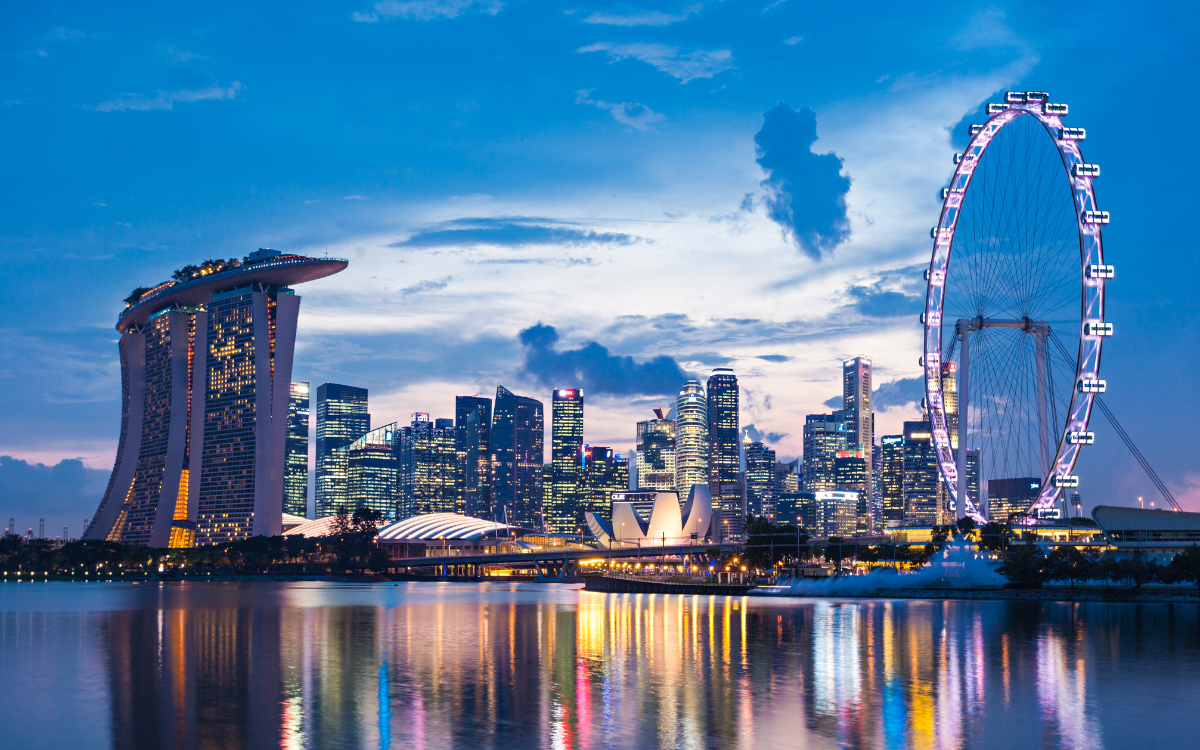
As Aviation Festival Asia is taking place in Singapore (18-19 February 2025), one of my favourite destinations in Asia, let’s explore the trends that makes this fascinating region so dynamic.
The Asia Pacific region had the strongest passenger traffic volume (measured in Revenue Passenger Kilometres) growth in 2024 according to IATA data, with a 16.9% growth compared to 2023. This growth is much stronger than the usual global annual growth, around 5%, which shows that the region was still in recovery from the COVID pandemic. Detailed figures suggest that markets like China and India have seen domestic not only recover, but even grow compared to 2019, with respectively 20.2% and 11.7% growth, whereas Australia or Japan are close to 2019 levels.
Besides the strong growth of the region, driven by the world’s two most populated countries, I’ve identified four trends that set this region apart from the rest of the world air travel:
- Mega aircraft orders
- Airline mergers and creations
- Travel lifestyle marketplace
- Alternative payment methods
Mega aircraft orders
Before the pandemic, the largest aircraft order belonged to Emirates, including the double decker A380 and other B777s. In 2023 the two main Indian carriers, IndiGo and Air India, announced respectively 500 and 470 aircraft ordered. These record-breaking orders are not a coincidence but reflect India’s economic growth and the relevance and increasing role of air travel as a mode of transport adapted to this geography. India is approximately 3000km wide north-south and east-west, whereas China is roughly 5 by 5 thousand kilometers and USA 5 by 3 excluding Alaska.
The orders are a sign of the growing economy in India (about 7% annually pre-pandemic and last two years) and a confidence in related travel demand. A 7% annual growth rate means that air traffic volume will double in 10 years. This impressive growth in travel demand will impact the entire value chain: travel sellers, airports, travel service companies, transportation to airports, etc. Unless infrastructure investments follow the demand, the rollout of the airline capacity may be chaotic.
Airline mergers and creations
In India, Air India not only placed a massive aircraft order but also merged, following the acquisition by Tata Group, with Air India Express, Vistara (jointly owned by Singapore Airlines) and AirAsia India. At the same time, attracted by the market growth, other airlines were created, such as Akasa Air, which is now the third largest airline in the country.
In South Korea, Korean Air and Asiana have completed their merger in 2024, and their respective low-cost subsidiaries (Jin Air for Korean and Air Busan and Air Seoul for Asiana) may follow the same path to become one Jin Air. In contrast with India, South Korea has a modest GDP growth between 1% and 2% (excluding pandemic recovery years), which has led to more airline consolidations than creations.
Travel lifestyle marketplace
Malaysia has a resilient GDP growth around 5%, with AirAsia (consolidated with AirAsia X under Capital A) and Malaysia Airlines leading the market. Capital A also owns or operates Thai AirAsia, Indonesia AirAsia, Philippines AirAsia and Cambodia, making it a leading airline group in the region.
AirAsia transformed itself from a low-cost carrier to digital travel and lifestyle platform, as well as an international airline group. The AirAsia super app is called MOVE. Unlike airline websites, it offers flights from 700 airlines, not only AirAsia, and close to 1 million hotels globally. MOVE looks more like an online travel agent than like other airline apps. MOVE also features ride-hailing and food delivery, like Uber would propose, which makes it an app for daily usage. MOVE gives access to BigPay, a payment solution, and to social and loyalty options.
What a brand like Apple did in the US, moving from computers to phones, music, movies and more lifestyle products, AirAsia is doing in Southeast Asia, building from the airline footprint towards dimensions of customers’ lifestyle.
Alternative payment methods
China’s economy is expanding at a 5% rate, with an uncertain outlook due to international tensions. At this rate, the air traffic volume will double in 15 years, by 2040. China’s aircraft manufacturer, COMAC, has registered more than 1,000 orders for C919 (narrow-body jet) from domestic airlines, which compares with Indian carriers’ order numbers.
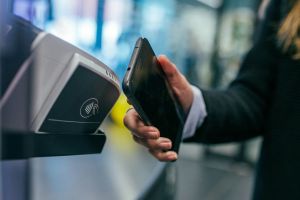
Chinese residents use two digital payment wallets: Alipay and WeChatPay, for online and in-store transactions. Alipay was launched by Alibaba, the e-commerce leader, and is now owned by the Ant group. WeChatPay was launched by WeChat (Weixin), and owned by Tencent Group. Consumers use QR codes for in-store payments, and app integration for online mobile payments. During my stays in China in 2024 I only used Alipay for all payments, and did not use Visa / Mastercard cards once, as merchants would not accept them.
Most countries in Asia Pacific support one or more national digital payment system, whereas Western countries still use payment cards powered by the rails of Visa and Mastercard. Consumers in India use the Unified Payment Interface, called UPI, while consumers use PayPay or Rakuten Pay in Japan, KakaoPay and Naver Pay in South Korea, Paynow and GrabPay in Singapore, PromptPay in Thailand, or MoMo in Thailand. The proliferation of payment methods means secure transactions, real-time payments, and lower merchant fees. At the same time, airlines need to become familiar with all these payment methods across all the markets where they operate and sell flights.
Conclusion
I’ve written about global trends in previous articles, such as sustainability (or energy transition) and digitalization (or digital transformation of legacy technology infrastructure). In this article, I’ve just raised five trends that differentiate the Asia Pacific region: air travel growth, aircraft orders, creations and mergers, lifestyle marketplace and alternative payment methods. You may have a different perspective, and I welcome your feedback. In any case the next Aviation Festival in Singapore is a great opportunity to take a closer look at this amazing region and the trends shaping the outlook for this market.
For more articles by Léopold see:
- What does airlines’ New Payment Capability (NPC) look like?
- The dual mode of airline innovation in technology
- Five opportunities to improve travelers’ experience post-COVID