Crisis rocked the Arabian Gulf in late February, when its major cities suddenly found themselves on the receiving end of Iranian missiles following a surprise attack on Iran by the US and Israel.
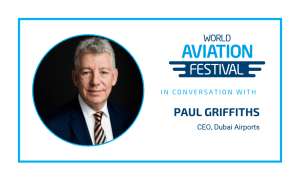
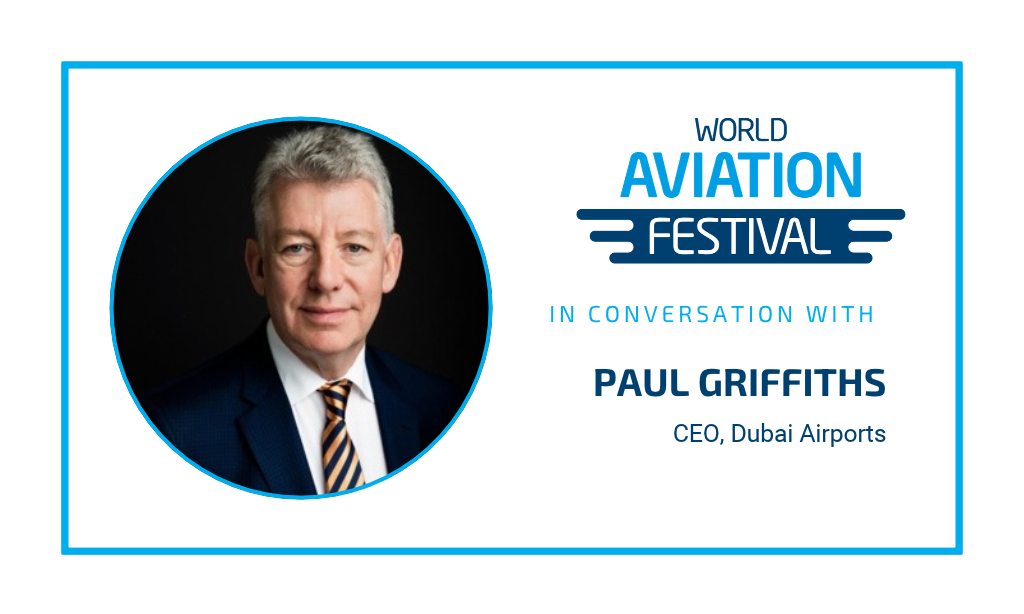
Airspace was closed immediately, grounding thousands of flights and affecting 1 million passengers around the globe. Dubai International Airport (DXB) even suffered a direct strike in the crossfire, damaging critical infrastructure. For Dubai Airports CEO Paul Griffiths, the situation was entirely without precedent:
The most important thing was to really understand the impact of the threat and to mitigate it. It was incredibly well managed through careful coordination and consummate professionalism across the whole aviation sector.
While direct missile attacks dropped off within a fortnight, Dubai would continue to feel their impact for months to come. Business and sporting events were cancelled due to the uncertainty of the situation, while passengers who might have travelled through one of the world’s largest aviation hubs chose different routes for fear of further disruption.
Six months later, Griffiths asserts that DXB is well on the road to recovery, with flag carrier Emirates up to 93% of their pre-conflict capacity. The airport is also on track to meet similar passenger year-end numbers as 2025, even in spite of the collapse in traffic in March. He adds:
Hopefully, this will have just been a bit of a blip and we will do our characteristic thing of bouncing back very rapidly indeed. We’ve seen that already: July over June, we grew by 26% in a single month.
One of the big beneficiaries of the Middle Eastern conflict was Istanbul Airport, which topped OAG’s European Megahubs 2026 ranking as a result of an increase in stopovers between Europe and Asia. Such journeys usually represent a significant proportion of DXB’s traffic, but Griffiths is adamant that 2026 is a one-off. While Istanbul and Singapore Changi might have welcomed travellers that otherwise might have gone through Dubai, these were temporary diversions, not a permanent change in customer behaviour.
We’ve kept the quality, the standards of safety, the security of the operation completely intact through the conflict. We’ve kept our reputation and brand intact, and now I think people are seeing things are back to normal, and as they come through the airport hopefully the experience is as good and seamless as it always has been.
Dubai has always strived to provide a world-class customer experience while remaining competitive on price. As DXB looks to rebound from the conflict, delivering a high-tech airport experience remains essential to emphasise its unique selling points. AI is already in force across the airport, from its biometric document-free corridor to video analytics on every aircraft stand to optimise turnaround. Driving down immigration times and minimising other aspects of the airport experience that no customer enjoys sit at the top of Griffiths’s agenda:
I’ve never met people who genuinely want to spend more time at an airport. So, if I can remove all the things they don’t like about airports and to make more space for the things they do like, then hopefully we’ll have happier customers in greater volume spending more money.
In the background, as well as managing innovation investment and geopolitical conflict, work on expanding Dubai World Central (DWC) continues. Designed to supersede DXB, once complete the airport will be the largest in the world, as well as one of the most technologically advanced. DXB is currently serving as a testbed for a range of solutions that Griffiths hopes to deploy at DWC from day one without any risk.
Everyone remembers the bad airport openings. No one remembers the good ones, and we want to make sure that DWC’s opening is as unmemorable as possible.
With DWC expected to host as many as 200 million passengers a year, Dubai is betting big on traffic continue to surge forward. This crisis year has certainly put a dent in growth plans, but as conflict continues across the Middle East, the industry will be watching attentively to see whether 2026 is only the blip Griffith asserts it is.
🎥 Watch the video to get the full conversation with Paul Griffiths.
Questions asked include:
- How did you manage the impact of the airspace closures and the uncertainty affecting passengers at the height of the conflict?
- As the conflict continues, have you seen numbers rebound? Is traffic back up to expected levels?
- Do you think this year’s events around the Gulf will have a long-term impact on the region’s status as aviation hubs?
- Are there any key investments you’re making in technology or experience to keep DXB ahead of the curve in this period?
Join us at Aviation Festival Asia 2027.
For more like this, see: