Airports are undergoing a new phase of development. More than just transport infrastructure, the airports of the 21st century are evolving into hubs for retail, fine dining, and business.
With demand for air travel set to double by 2050, there’s a real opportunity for airports to bring social and economic benefits to the regions they serve. Excellence in design can even turn airports into landmarks in their own right, such as Singapore Changi’s Jewel complex, which features the 40-metre Vortex water feature, an ‘urban garden’ concept, and 135,700 square metres of shops, hotels, and attractions.
On the other side of the world, Brazil’s Florianópolis International Airport might be significantly smaller than Changi, but has still become a gathering point for locals thanks to its bars, restaurants, and events. And at other global locations, from Roland Garros airport on La Réunion to Portland International in the US, airports are leaning into unique design details and attractions that make them valuable assets beyond functional air travel process points.
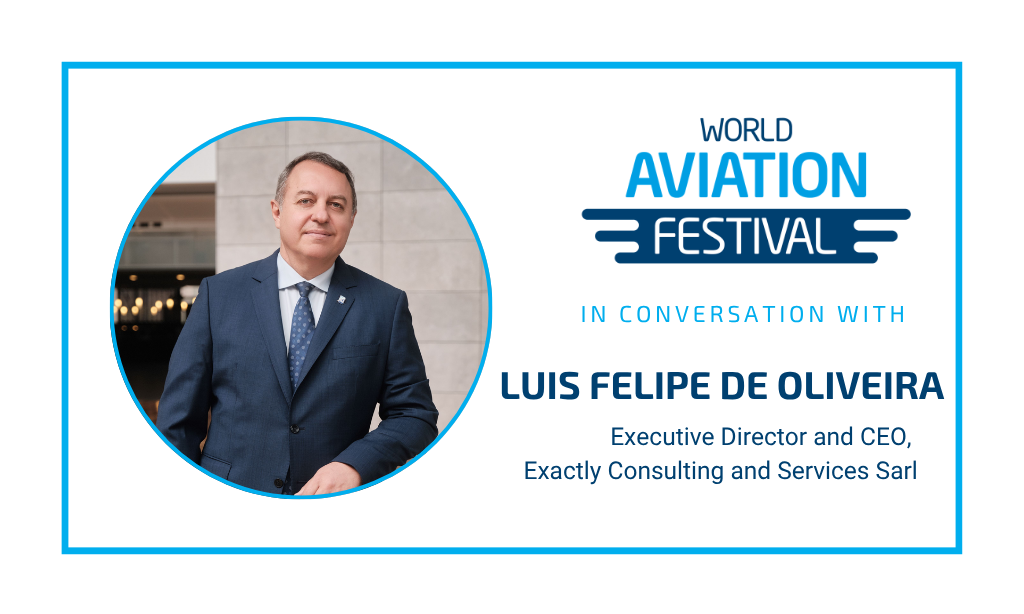
Luis Felipe Oliveira, former Director General of Airports Council International (ACI) and Executive Director and CEO, Exactly Consulting and Services Sarl, notes:
These examples really remind us that airports nowadays are not just gateways to connect people and airlines, but experimental cultural and commercial centres that are designed to deepen community engagement, enhance passenger satisfaction, and diversify revenue in this rapid evolving industry.
This ‘airport city’ model offers airports more opportunities to grow their value while also offering the seamless travel experience that passengers increasingly come to expect.
The rise of the airport city model
One of the most notable airport city projects in development today, SKYTOPIA at Hong Kong International will serve as a multi-modal travel hub, as well as a regional centre for arts and sport. The airport’s strategic location means it is connected to Hong Kong by rail, Macau by road, and mainland China by boat. Once complete, SKYTOPIA will capitalise on these assets, serving as a unique meeting point for both business and leisure.
Of course, not every airport is a huge global hub like Hong Kong. Adopting the airport city model will look different depending on the size of the airport and the region it serves. De Oliveira notes that multi-modal connectivity should be a priority for any airport, to prioritise accessibility:
At Beijing Daxing Airport, you have a train terminal that’s basically the same size as the airport. You can connect the long-haul flyers with connections inside China in a very efficient way. That’s why this connectivity will help to evolve the customer experience for the passengers and also improve the connectivity of the airports beyond the airline side.
Tech integration: High potential as well as pitfalls
In adopting the airport city model, aviation is borrowing from the hospitality playbook, trying to welcome passengers as guests and making airports an environment where they want to spend time. Biometrics, AI, and a raft of high-tech solutions are being introduced to make airport journeys more frictionless and less stressful.
Yet while the capabilities of technology are exciting, investments must be grounded in the airport’s reality. What works for a megahub like Changi won’t have the same value in Florianópolis. Moreover, airports don’t operate in isolation: they are the product of many airlines, companies, government agencies, and staff working together. De Oliveira says cross-stakeholder collaboration is essential to driving productive change:
That’s why airports need to define a clear roadmap for technology that will help them to define the right partners. We need to bring solutions that are not linked with only one provider, but provide opportunities to be interoperable.
He also stresses that technology ‘cannot replace the human touch’. As demographic change increases the proportion of elderly passengers in aviation hotspots such as Japan, airports need to have strong accessibility measures and well-trained staff on-hand to manage these customers safely and effectively.
Despite all the advantages of technology, it cannot replace the human services, the courtesy, the empathy, and the problem-solving skills that remain essential in lounges, food and beverage, the customer service desk, and every other point where passengers need support beyond what automation can provide you.
Redefining airport identities
What better accessibility, technology, and the airport city model all contribute to is a redefinition of the airport. No long are customers just passengers passing through; they are guests, shoppers, diners, and business professionals who actively enjoy the time they spend at the airport rather than stressing about missing their flight.
Discussing these topics and understanding how airports of all sizes can achieve a model that that works for them will be a central conversation at World Aviation Festival 2026. De Oliveira will be serving as a moderator on the Airport Keynote as well as the Airport/Airline Collaboration Track, hosting interviews and panels. Together, attendees will discuss balancing the human and digital experience, cross-stakeholder engagement, and where they’re investing next to achieve their goals.
Speakers you won’t want to miss include:
- Mr. Arun Bansal, Group CEO, Adani Airports
- Lars Redeligx, CEO, Düsseldorf Airport
- Olubunmi Kuku, CEO, Federal Airports Authority of Nigeria
- Javlonbek Umarkhodjaev, Chairman, Uzbekistan Airports
Register to join us in Lisbon today! Don’t forget that if you work for an airline or airport, you are entitled to a complimentary all-access pass.
🎥 Watch the video below to get the full interview with Luis Felipe de Oliveira.
For more interviews with top airport speakers, see: