Author: Hugh Aitken, COO, Dohop
Airline networks are under extraordinary pressure. Rising jet fuel prices, supply uncertainty linked to the war in Iran and capacity adjustments have forced airlines to reassess which routes still make economic sense. Some have already signalled fare increases, while others are outright cancelling flights considered unprofitable.
The European market, which sources up to a quarter of its aviation fuel from the Gulf, is more exposed to this kind of shock than its North American counterpart. Short-haul routes are likely to bear the brunt of these challenges and to lead to more multi-segment itineraries structured through traditional or virtual interlining or self-connection.
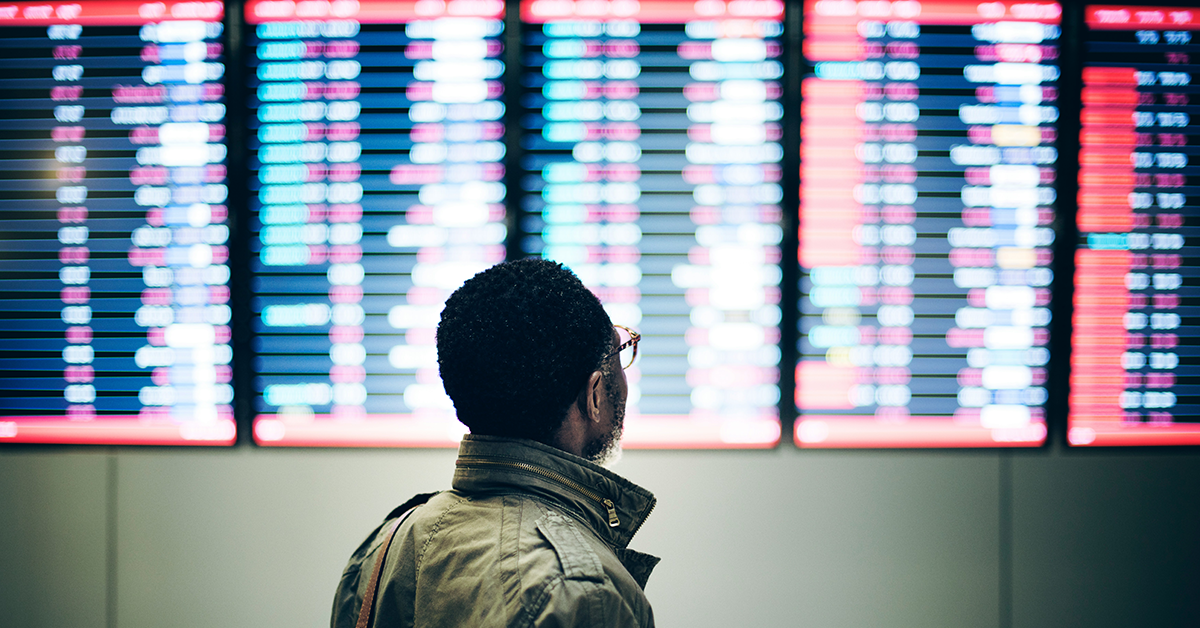
When disruption affects these itineraries, especially those that span carriers without a shared servicing framework, passengers often have to fend for themselves. A delayed inbound flight can lead to a missed connection with no agreed-upon process for rebooking. Baggage might not transfer as expected, forcing passengers to reclaim and recheck their luggage between segments, adding time and risk. For affected passengers, the question then becomes: who is responsible for getting me to my destination? Too often, there is no clear answer.
What happens when journeys span carriers
Connected travel strives to be the solution. Rather than treating each segment as a separate transaction, it brings multi-carrier itineraries into a single, coordinated booking, one where connections are defined in advance and supported during a disruption.
Consider a passenger flying from Barcelona to New York via London Gatwick on two low-cost carriers. Today, that journey might be built as a self-connection. If the first flight is delayed, the passenger misses the onward leg, must collect and recheck baggage, and is left to find an alternative flight at their own expense.
In a connected travel model, that same journey can be managed as a single trip. That means a clear, single source of accountability, as well as the ability for participating airlines to provide optional rebooking support and airside baggage transfers.
Putting disruption to the test
This move toward connected travel is already underway. Airlines that have historically relied on point-to-point models are taking greater control over how they build and support multi-segment journeys within their networks. Carriers such as easyJet and Wizz Air have embraced supported connection models, often powered by platforms like Dohop’s, which supports coordination among partners without the complexity of traditional interline agreements.
This approach also allows airlines to expand their offerings and reach more customers, serving as a competitive advantage in a crowded market. But perhaps the most visible value of this approach for passengers is when disruption occurs.
In April, Norse Atlantic cancelled its scheduled summer flights to Los Angeles due to rising fuel costs, leaving passengers planning multi-leg journeys in limbo. For those who had purchased ConenctSure, a travel protection product offered through Dohop, alternative routing options could be offered where available, with rebooking support across its partner network, reducing the servicing burden on airlines while giving passengers clearer outcomes. Unmanaged connections can’t deliver this level of coordination.
As airlines reassess which routes they can operate profitably, the ability to coordinate travel beyond their own network is becoming increasingly important.
Connected travel and the multi-modal journey
Short-haul routes are already under scrutiny from both a cost and sustainability perspective. A journey between Brussels and Amsterdam, for example, can be completed more efficiently by rail, yet flights between the two cities still exist primarily to support onward connections.
In a connected travel model, rail can be integrated as a supported segment, allowing airlines to maintain connectivity without operating less efficient routes. Crucially, the airline that issues the ticket retains ownership of the passenger and the journey, even when another mode of transport carries out part of the trip.
This might seem like a minor technical detail, but “ownership” of the booking has a significant impact on the passenger. Rather than operators handing passengers off, the airline remains responsible for the overall experience, including disruption handling and communication. This aligns closely with how airlines are evolving their retail strategies, focusing on managing a single order from start to finish, regardless of the number of partners or segments involved.
For decades, expanding a network meant adding routes or entering costly, time-consuming bilateral agreements. Today, the challenge is less about where an airline flies and more about how effectively it can participate in a broader travel system that extends beyond its own operations.
From operating flights to delivering journeys
Disruption is a constant in aviation, whether driven by geopolitics, fuel markets or broader economic conditions and pressures. As a result, airlines have invested heavily in the systems needed to keep aircraft and crews moving, from schedule recovery to real-time operational decision-making.
What those systems are designed to do, however, is restore the operation. They were not designed to manage the passenger journey when it spans multiple airlines.
As networks become more interconnected, the ability to coordinate, support and adapt multi-carrier itineraries will become a defining factor in how passengers experience travel. The real test is whether airlines can coordinate rebooking, baggage and support across carriers and protect the passenger’s end-to-end journey when disruption hits.
Author bio:
Hugh Aitken is the COO of Dohop, a travel technology company enabling connected travel through virtual interline and disruption management solutions. He has held several senior roles across travel tech and aviation, bringing broad experience across airlines, airports and digital platforms. Before joining Dohop in 2025, he was at Skyscanner, where he held several senior leadership roles, including overseeing its global flights and B2B businesses. He has also held senior commercial positions at easyJet and within the UK airport sector, giving him a strong understanding of how technology can better connect journeys and improve the overall traveller experience.
For more like this, see: