Alaska Airlines has always been one of aviation’s most innovative carriers. The first airline to sell a ticket online, the first to fly using GPS: Alaska’s frequently been ahead of the pack, and wants to retain this edge going forward.
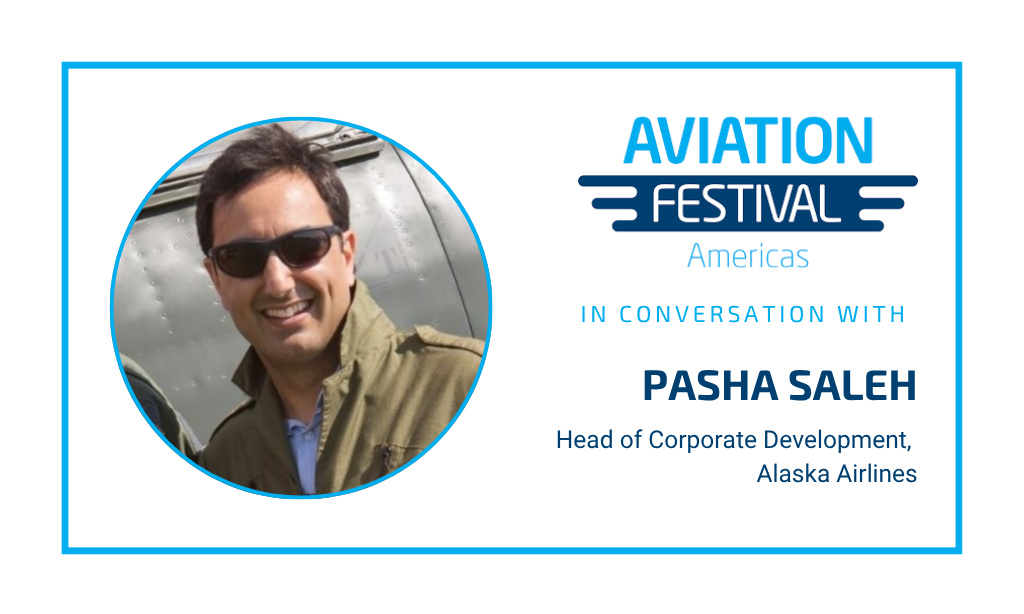
Pasha Saleh, the carrier’s Head of Corporate Development, oversees an innovation programme that is building new aviation companies in-house. Three startups have already been established in partnership with UP.Labs, a venture studio. The collaboration looks to find novel solutions to the industry’s biggest challenges, which could in turn be sold across the market.
The collaboration with UP.Labs was really an outgrowth of, “Hey, we’re a company that innovates, and we actually implement innovations that often times the rest of the industry ends up following. What can we do to identify the biggest challenges now, and create a solution that doesn’t exist?”
From over one hundred suggestions, Alaska selected several commercial opportunities that could benefit from greater innovation. Three startups are now operational across key verticals: pricing and revenue management, schedule optimisation, and predictive maintenance. A fourth is in stealth mode and will launch soon.
Alongside the UP.Labs partnership, Saleh runs Alaska’s in-house venture arm, Alaska Star Ventures. This looks to nurture technologies that are essential for aviation’s future development, including sustainable aviation fuel (SAF) and blended wing aircraft. Entrepreneurs are invited to test their solutions directly within Alaska’s ecosystem to get more tech out of labs and into real-life operations. This approach is especially essential in the decarbonisation space, where many of aviation’s net-zero targets rest on scaling or creating something new. Saleh points out:
If we don’t do it, then it’s not going to magically create itself.
Through the recent merger with Hawaiian Airlines, Alaska Air Group has become a more sizeable business than ever before. Saleh is conscious of the carrier’s collective environmental footprint, and continues to push a more aggressive sustainability agenda in partnership with the oneworld alliance, of which it holds membership.
Sustainability remains the core focus of the venture fund, but its focus has also branched out to investing in other solutions. Saleh, a former pilot , is especially excited by Loft Dynamics, a company building virtual reality flight simulators that can improve crew training. In the near future, he hopes to see these investments build to create a more agile, carbon-efficient airline that stands out in the market for its innovation. He notes:
Airlines are not Google. We don’t have tonnes of excess cash to apply to these things. I’m very grateful to our board and our leadership for having the courage and the foresight to set up a venture fund.
🎥 Watch the video to get the full interview with Pasha Saleh.
Questions asked include:
- In partnership with UP.Labs Alaska have developed three startups. How did this project develop and what kind of success have you seen as a result?
- As manager of Alaska Star Ventures, what are you on the lookout for from startups? Which current challenges would you like to be able to address through tech?
- What’s your approach to sustainability? Is it possible to innovate a way to net zero?
- In 10 years, what would you like Alaska Airlines to look like as a result of stronger partnerships with startups and other investment opportunities?
Join us at World Aviation Festival 2026.
For more like this, see: