One word to characterise the year in aviation operations so far? disruption.
From ongoing conflict in Ukraine to the sudden outbreak of hostilities in the Middle East in March, airports and airlines have had to manage swathes of cancellations and delays, as well as their impact on thousands of passengers.
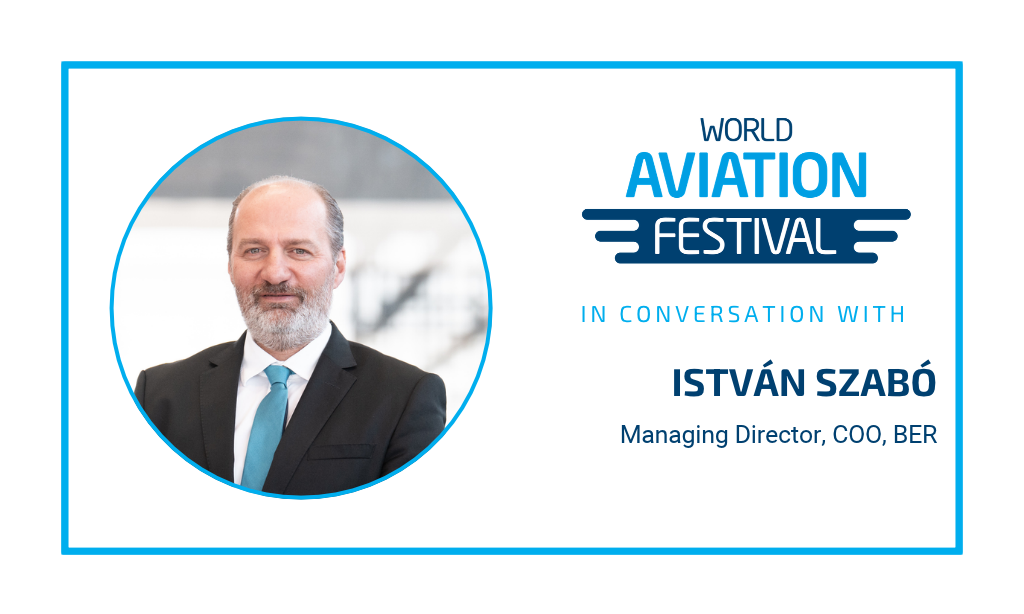
Berlin Brandenburg Airport (BER) serves over 26 million customers a year, making it the third-busiest airport in Germany and among the 25-busiest in Europe. István Szabó, the airport’s COO and Managing Director, says his approach to managing 2026’s disruptions was built on one word: resilience.
We try to collaborate in a way with our partners that everyone is as resilient as possible in a crisis.
This year’s events have placed significant stresses across the aviation ecosystem. Airlines are grappling with the impact of high fuel prices, while airports have had to reduce growth forecasts as traffic to the Middle East remains below normal levels. In these IROPs scenarios, collaboration is more important than ever to ensure passengers have the most up-to-date information and to mitigate any downturns through teamwork.
It’s a huge team effort, just as it is in any other crisis that we had in the aviation.
Investing in tech for better data sharing
To support resilience during regular and irregular operations, BER’s dedicated airport control centre brings together data from across the airport ecosystem, including information from the police and security services all the way up to ground handlers and airlines.
The airport is using this data to fuel an AI-powered platform that will optimise turnaround time. Additional investment in a community app to enable all airport stuff to relay information will further democratise communications and ensure all partners can react quickly to events across the terminal.
As well as geopolitical disruption, 2026 also brought record-breaking heat to Europe, with temperatures in Berlin exceeding 40 degrees celsius for several days at a time. Airports across the continent are having to grapple with the impact of climate change, and how to manage their infrastructure for high performance even during extreme weather. Szabó and his team are looking to new solutions to prevent damage and keep operations running smoothly.
Airport infrastructure is really sensitive to either very cold or very very hot weather. This summer, we’ve seen in Germany an airport where part of the tarmac was actually completely destroyed in an area because the tarmac was badly damaged due to the heart. So in order to have to avoid these situations we are looking into preventive maintenance equipment.
Sensors buried 1.5 metres under the tarmac could be used to record scratches and other surface defects that could worsen during extreme weather. Robotics is also another future target for investment, including the deployment of autonomous vehicles and potentially even in future humanoid robots for the management of baggage.
Collaboration is essential for aviation to move forward
The importance of collaboration for a more effective aviation ecosystem is a key topic at this year’s World Aviation Festival. For the first time, a dedicated Airport/Airline Collaboration track will bring together airlines, airports, and ground handlers to discuss successes so far and where the industry could do better.
Szavbó will be joining a panel on Wednesday 14th October discussing his favourite theme: resilience. His fellow speakers include:
- Adam Schipper, Director Business Development-Transportation & Logistics, Ericsson
- Marc-Philippe Lumpé, Chief Operations Officer, Air Transat
- Chamith Seneviratne, Manager, Airport Operations, Air Canada
It’s not to late to join us at World Aviation Festival 2026: register for a ticket today. And explore further airport/airline collaboration sessions, as well as the fifteen other exciting tracks at this year’s event, here.
🎥 Watch the video to get the full interview with István Szabó.
Questions asked include:
- What has geopolitical disruption in the Middle East taught the airport about managing IROPs situations?
- Where are we still seeing gaps in disruption management? How do you hope to do better?
- When it comes to collaborating with airlines and ground handlers, how are you building out infrastructure for easy data sharing and more co-ordinated decision-making?
- How is digitisation advancing operational excellence? Which tools are you looking to invest in next for more seamless journeys across Brandenburg?
For more interviews, see: